
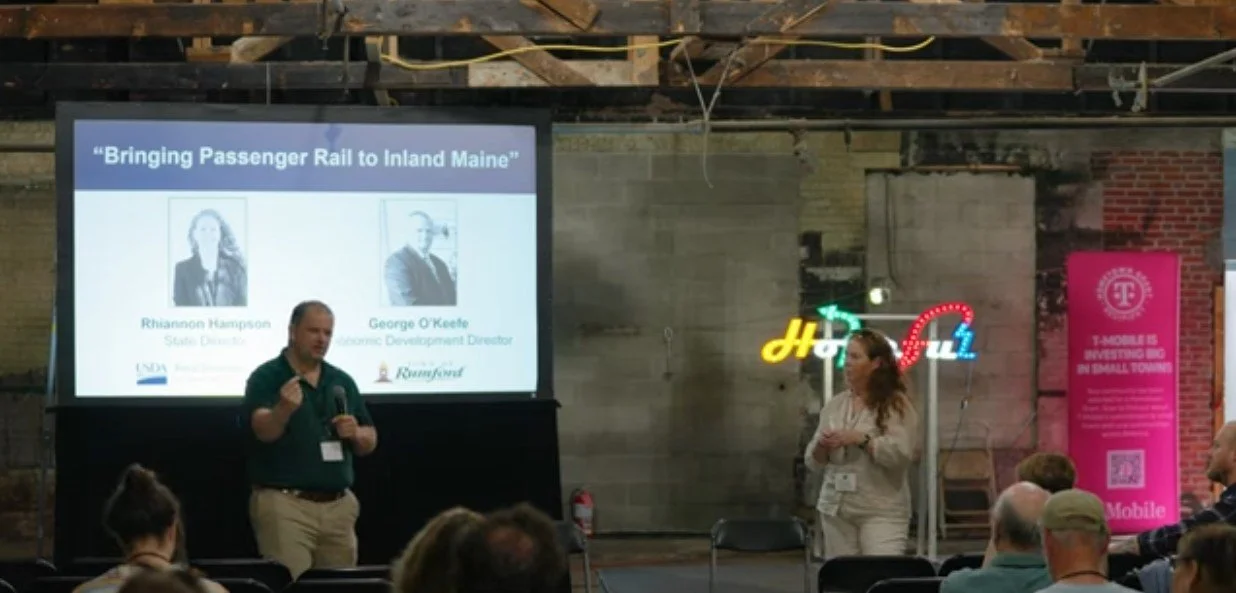
Addressing Traffic Congestion with Passenger Rail to Inland Maine
Efforts to expand passenger rail to Lewiston, Waterville, Augusta, Bangor, and other inland communities have faced resistance, pointing to Maine’s small population as the reason. As more people move to Maine to escape climate issues in other states, suburban development and related traffic impacts continue to erode our regional road system. Maine has an opportunity to think bigger about the future of transit, recognizing the greater return on investment associated with transit-oriented investment in existing community centers, the benefits of locating housing near jobs, and the potential for inter-city rail to support regional and local micro-mobility. Join a conversation with voices from rural Maine to explore how strategic investment in rail can fuel our communities.
George O’Keefe | Town of Rumford
Rhiannon Hampson | Maine State Director, USDA Rural Development
Efforts to expand passenger rail to Lewiston, Waterville, Augusta, Bangor, and other inland communities have faced resistance, pointing to Maine’s small population as the reason. As more people move to Maine to escape climate issues in other states, suburban development and related traffic impacts continue to erode our regional road system. Maine has an opportunity to think bigger about the future of transit, recognizing the greater return on investment associated with transit-oriented investment in existing community centers, the benefits of locating housing near jobs, and the potential for inter-city rail to support regional and local micro-mobility. Join a conversation with voices from rural Maine to explore how strategic investment in rail can fuel our communities.