
Maine PlaceCode Library 301
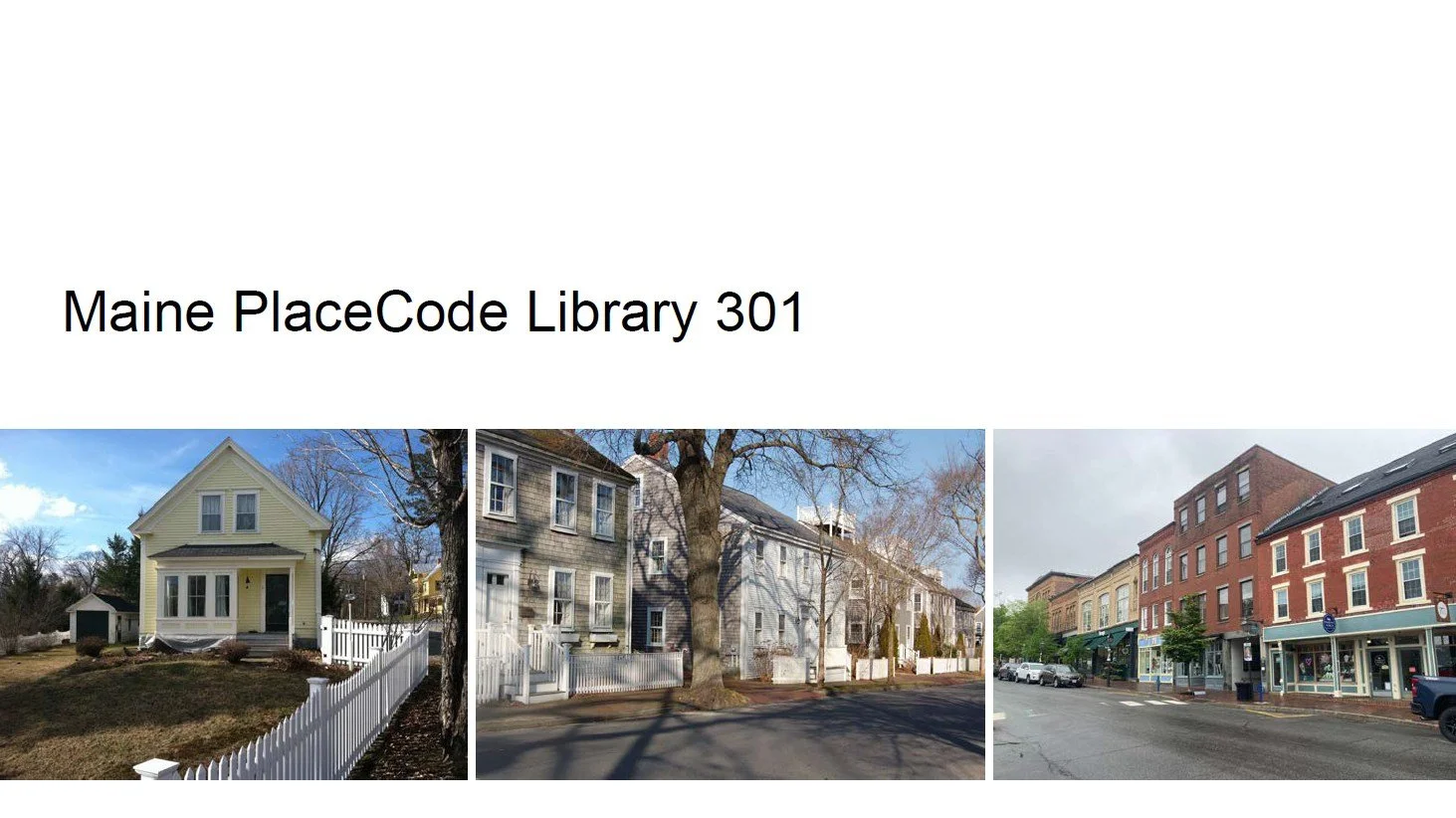
Click the above image to view the Maine PlaceCode Library 301 presentation.
This class focuses on advancing code writing skills and is intended for existing and emerging code writers, such as municipal or regional planning staff, lawyers, planning consultants, and community advocates. Participants should have an enthusiasm for code writing and an interest in helping municipalities address local zoning challenges. This session is intended to train participants in the use of the PlaceCode toolbox, enlarge the pool of qualified code writers, and establish a network of code practitioners to share and problem solve.
Participants will develop public engagement and code writing skills, and will learn how to:
Run a successful public engagement process.
Advance local planning objectives through zoning changes.
Provide staff and board trainings.
Write and calibrate code within the PlaceCode framework.
Maine PlaceCode Library 201
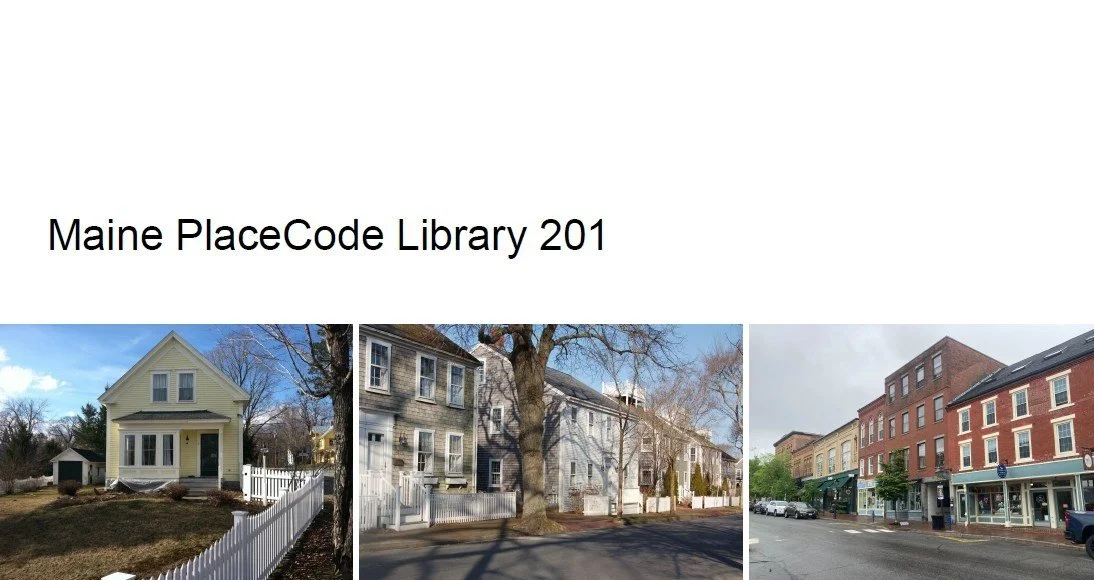
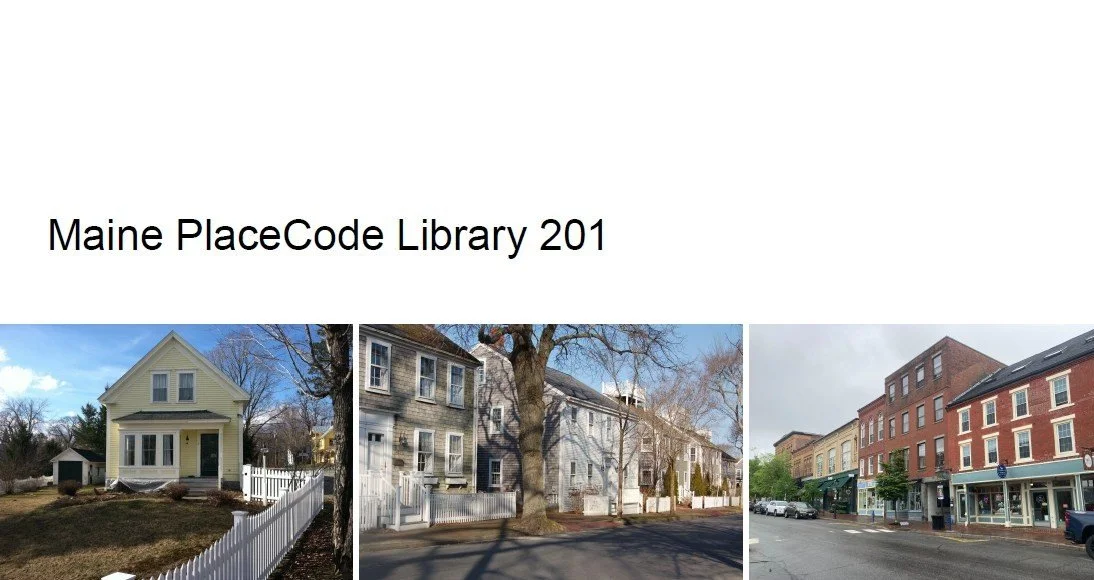
Click the above image to view the Maine PlaceCode Library 201 presentation.
The Maine PlaceCode Library Code Writers Training class is for practitioners who write, interpret, and administer land use policy and zoning regulations, and have a strong working knowledge of zoning systems. This class will dive into the nuance of how to use the PlaceCode and will walk through how practitioners can help their municipalities calibrate zoning to respond to local conditions and objectives. This class will provide participants with knowledge of how the PlaceCode works, how to calibrate it locally, and how to apply it to address common issues. Participants should come with specific challenges and questions in mind.
Maine PlaceCode Library 101
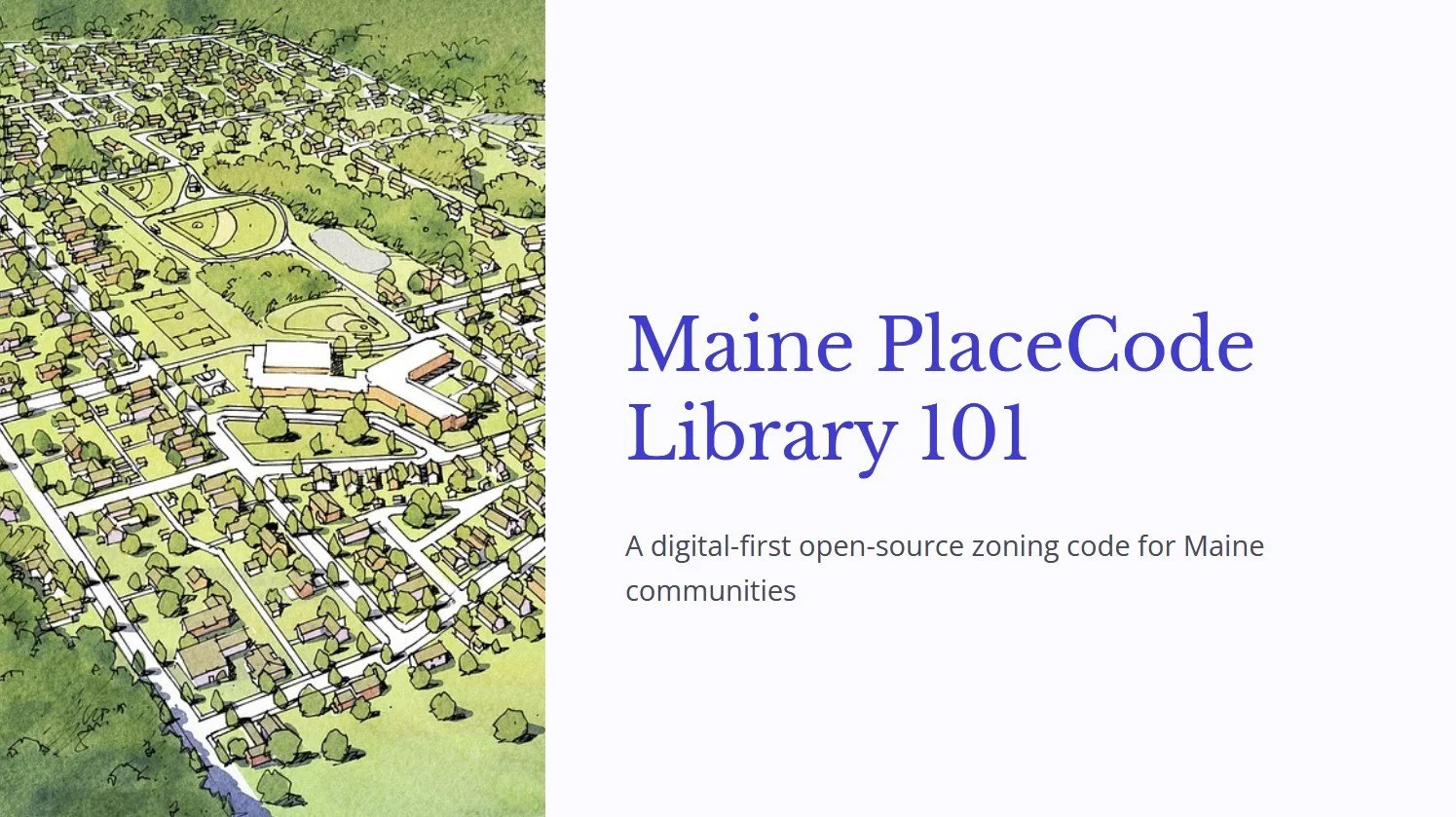
Click the above image to view the Maine PlaceCode Library 101 presentation.
The Maine PlaceCode Library 101 webinar provides an overview of “the why” of the PlaceCode, including outlining the reasons for updating zoning and political land mines to avoid. Watch the video linked below to learn about the genesis of the PlaceCode, which was developed as an alternative to existing outdated zoning. Instruction covers the limitations and issues that result from 1970s vintage zoning codes, and explain the framework for the PlaceCode, based on local development patterns and meeting the common objectives of communities. This webinar also reviews the economic development case for the PlaceCode, how to advocate locally for updating local zoning to promote housing and economic development.
Action Alert: Support an Act to Revise the Growth Management Law! Public Hearing, Thursday, May 8th 9:00 am - 2:00 pm

LD 1940 - An Act to Revise the Growth Management Law
LD 1940 provides an update of Title 30-A, Chapter 187, the current Growth Management Law, to modernize the statute, which directs the Comprehensive Planning process used by municipalities across the State.
This bill is one of two Growth Management Laws coming in front of the Committee of Housing and Economic Development this coming week, May 8th, and this is the bill we support. LD 1940 is sponsored by Melanie Sachs (sponsor of the Maine Redevelopment Land Bank), and co-sponsored by both chairs of the Committee on Housing and Economic Development, Representative Traci Gere and Senator Chip Curry, as well as Speaker of the House Ryan Fecteau and Senate President Mattie Daughtry.
LD 1940 is supported by over 40 diverse organizations all coming together to work on and advance this bill. LD 1940 is also a key priority bill of the Environmental Priorities Coalition, comprised of 39 organizations that work across Maine.
The recommended updates to the statute do the following:
Emphasizes planning for the future, not the present and the past, with an emphasis on outcomes-based planning.
Lifts the burden of comprehensive planning on communities small and large by eliminating the exhaustive State data checklist.
Gives municipalities the time and flexibility to focus on visioning and to more deeply explore issues of utmost importance to the community.
Provides a tighter, leaner, faster process for working through a local comprehensive plan.
Focuses inventory activities on critical natural systems and environmental systems mapping as the basis for local planning and conservation work.
Creates a more nuanced and meaningful set of definitions for rural areas to help better protect working lands and critical natural areas.
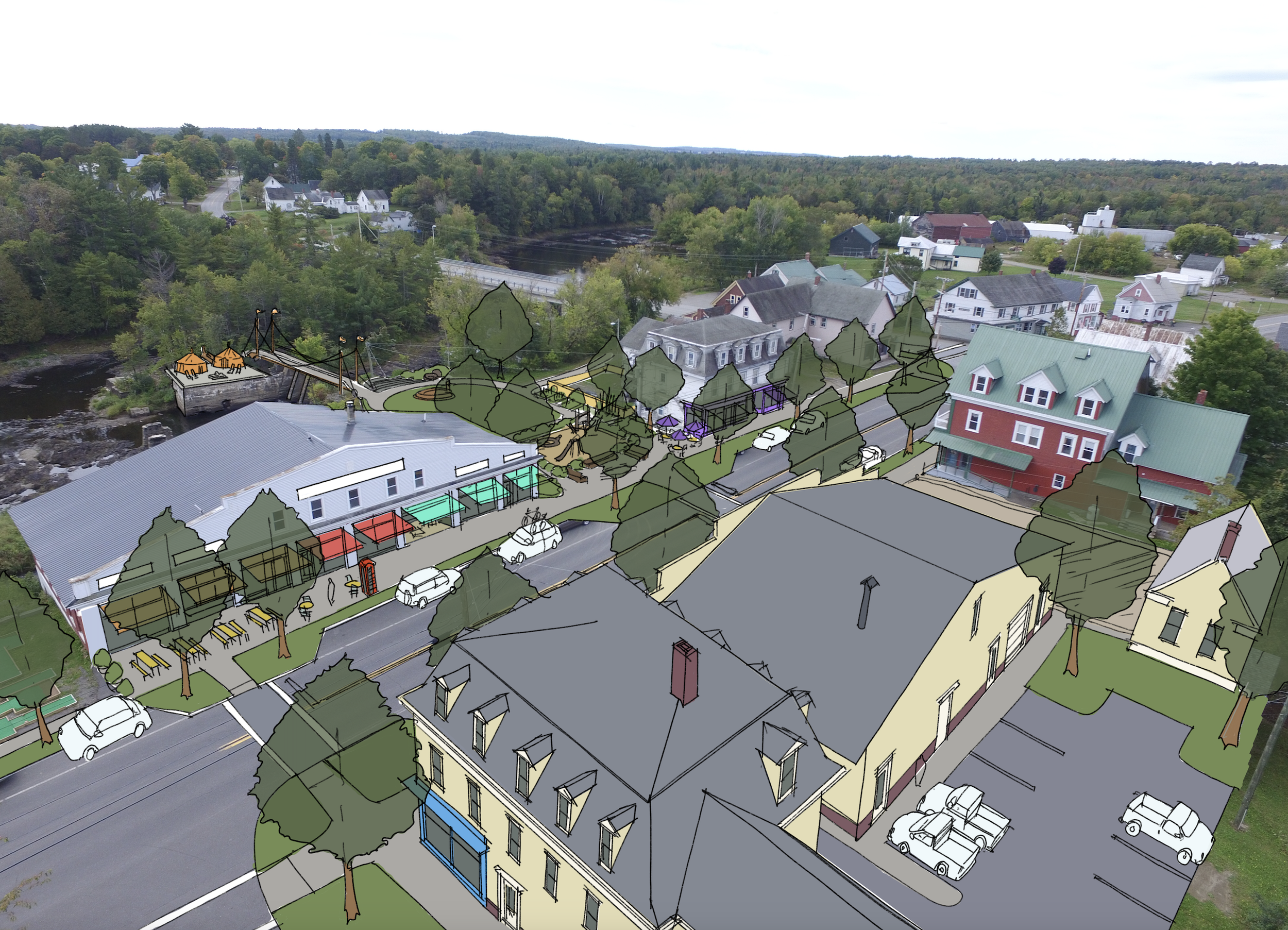
Redefines “growth areas” with recognizable placetypes such as crossroads, villages, neighborhoods, downtowns, and high-impact corridors. This updated framework better helps communities meet local goals and provides the foundation for effective policy and implementation.
Expands the public process with suggestions for creative and effective engagement tools for increasing public participation.
Affirms current statute by continuing to reward communities that undertake critical planning work.
The goal of Policy Action 2025 is to address barriers to and create incentives for equitable, sustainable growth and development that strengthens downtowns and villages of all sizes while pulling development pressure away from productive and open natural areas. We do so acknowledging that Maine has urban, rural, and suburban settings for which any solution may/not be a fit and a variety of people who deserve to be welcomed to their communities.
Questions related to this bill? Reach out to the working group point person karawilbur@gmail.com.
The public hearing for LD 1940 is scheduled for May 8, 2025 at 9:00 am before the Legislature's Committee on Housing and Economic Development.
Begin your letter with:
[DATE]
RE: Testimony IN SUPPORT of LD 1940, An Act to Revise the Growth Management Law
Senator Curry, Representative Gere, and Members of the Committee on Housing and Economic Development;
My name is [ENTER NAME] and [I live in / I work for ENTER TOWN or ENTER ORGANIZATION NAME]. Please accept this testimony IN SUPPORT of LD 1940, An Act to Revise the Growth Management Law.
[Describe your reasons for supporting the bill.]
LR LD 1940 is supported by the Environmental Priorities Coalition, which includes the following organizations:

Help Shape State Policy and Join a Working Group!

In spring 2024, GrowSmart Maine and Build Maine hosted three virtual brainstorming sessions with statewide partners to discuss and develop forward-thinking legislative proposals and prioritize policy actions for the 2025 legislative session. The results of this brainstorming effort can be found at our interactive Miro board, where participants posted ideas, and helped to sort and prioritize policy actions. From that work, the Policy Action "bus drivers", or working group leaders, distilled the Miro board down to 7 key policy actions that have energy behind them and that meet the goals of Policy Action.
The working groups are open to anyone interested in helping do the work and advance the legislation. Please sign up to join a working group by clicking the button below. It makes sense for you to join a working group if you are passionate about the topic and can make time to engage in the work, if you can help write technical policy language, help with logistics or promotion, or can bring other energy to the work. Time commitments will likely be weekly or bi-weekly zoom calls with your working group, with potential for production time in between meetings, depending on your role.
Action Alert: Support Housing and Protect Working Lands!
Two public hearings are scheduled for Friday, January 5, 2024 at 9:00 am and another public hearing is scheduled for Tuesday, January 9, 2024 before the Legislature's Joint Select Committee on Housing. Details below.
LD 1672, An Act To Establish An Affordable Housing Permitting Process
- Public Hearing Friday, January 5, 9:00 am -
This bill allows for well designed housing in areas that municipalities have designated for growth, but where zoning has not been updated to accommodate that housing. In such cases, a developer may pursue approval through the Affordable Housing Development Review Board, which reviews projects based on local municipal plans and review standards that ensure projects are high quality and meet local planning objectives.
Bill language can be found HERE.
Talking points can be found HERE.
LD 1257, An Act To Increase Housing Capacity And Protect The Municipal Tax Base And Working Lands
- Public Hearing Friday, January 5, 9:00 am -
This bill provides critical updates to subdivision law by simplifying the development review process in growth areas and reducing development pressure on working forest and farmlands designated as rural by communities. This bill also clarifies how to treat creation of multiple units within a building and works to align subdivision rules with LD 2003 to reduce some confusion and complexity for municipalities.
Bill language can be found HERE.
Talking points can be found HERE.
LD 602, An Act To Provide Regional Support To Deliver State And Federal Programs To Cities And Towns In The State
- Public Hearing Tuesday, January 9, 1:00 pm -
Provides direct resources to regional planning commissions for the development of municipal ordinances, the examination of regional suitability for new housing developments and the development of model ordinances for the benefit of large and small communities; efficient delivery of technical assistance through the existing regional planning commission structure to provide cities and towns access to federal and state programs for housing, land use and economic development; and improved mapping and geographic information system support to accomplish state and regional goals.
Bill language and talking points coming soon.
The goal of Policy Action 2023 is to address barriers to and create incentives for equitable, sustainable growth and development that strengthens downtowns and villages of all sizes while pulling development pressure away from productive and open natural areas. We do so acknowledging that Maine has urban, rural, and suburban settings for which any solution may/not be a fit and a variety of people who deserve to be welcomed to their communities.
The public hearings will be before the Legislature's Joint Select Committee on Housing.
Want to provide written testimony?
Begin your letter with:
Dear Senator Pierce, Representative Gere, and Members of the Joint Select Committee on Housing,
My name is [ ENTER NAME] and I live in [ ENTER TOWN].
Describe your reasons for supporting the bills.
Action Alert: Support Updates to the Growth Management Law!
LD 1976 - An Act to Update the Growth Management Law
LD 1976 provides a redline of Title 30-A, Chapter 187, the current Growth Management Law, to update and modernize the statute, which directs the Comprehensive Planning process used by municipalities across the State. This update is focused on the comprehensive planning process.
The recommended updates to the statute do the following:
Emphasizes planning for the future, not the present and the past, with an emphasis on outcomes-based planning.
Lifts the burden of comprehensive planning on communities small and large by eliminating the exhaustive inventory checklist.
Gives municipalities the time and flexibility to focus on visioning and to more deeply explore issues of utmost importance to the community.
Provides a tighter, leaner, faster process for working through a local comprehensive plan.
Focuses inventory activities on critical natural systems and environmental systems mapping as the basis for local planning and conservation work.
Creates a more nuanced and meaningful set of definitions for rural areas to help better protect working lands and critical natural areas.
Redefines “growth areas” with recognizable placetypes such as crossroads, villages, neighborhoods, downtowns, and high-impact corridors. This updated framework better helps communities meet local goals and provides the foundation for effective policy and implementation.
Expands the public process with suggestions for creative and effective engagement tools for increasing public participation.
Affirms current statute by continuing to reward communities that undertake critical planning work.
The goal of Policy Action 2023 is to address barriers to and create incentives for equitable, sustainable growth and development that strengthens downtowns and villages of all sizes while pulling development pressure away from productive and open natural areas. We do so acknowledging that Maine has urban, rural, and suburban settings for which any solution may/not be a fit and a variety of people who deserve to be welcomed to their communities.
Questions related to this bill? Reach out to the working group point person Vanessa Farr at vanessa@principle.us.
The public hearing for LD 1976 is scheduled for November 14, 2023 at 10:00 am before the Legislature's Joint Select Committee on Housing.
Begin your letter with:
Dear Senator Pierce, Representative Gere, and Members of the Joint Select Committee on Housing,
My name is [ ENTER NAME] and I live in [ ENTER TOWN].
Describe your reasons for supporting LD 1976.
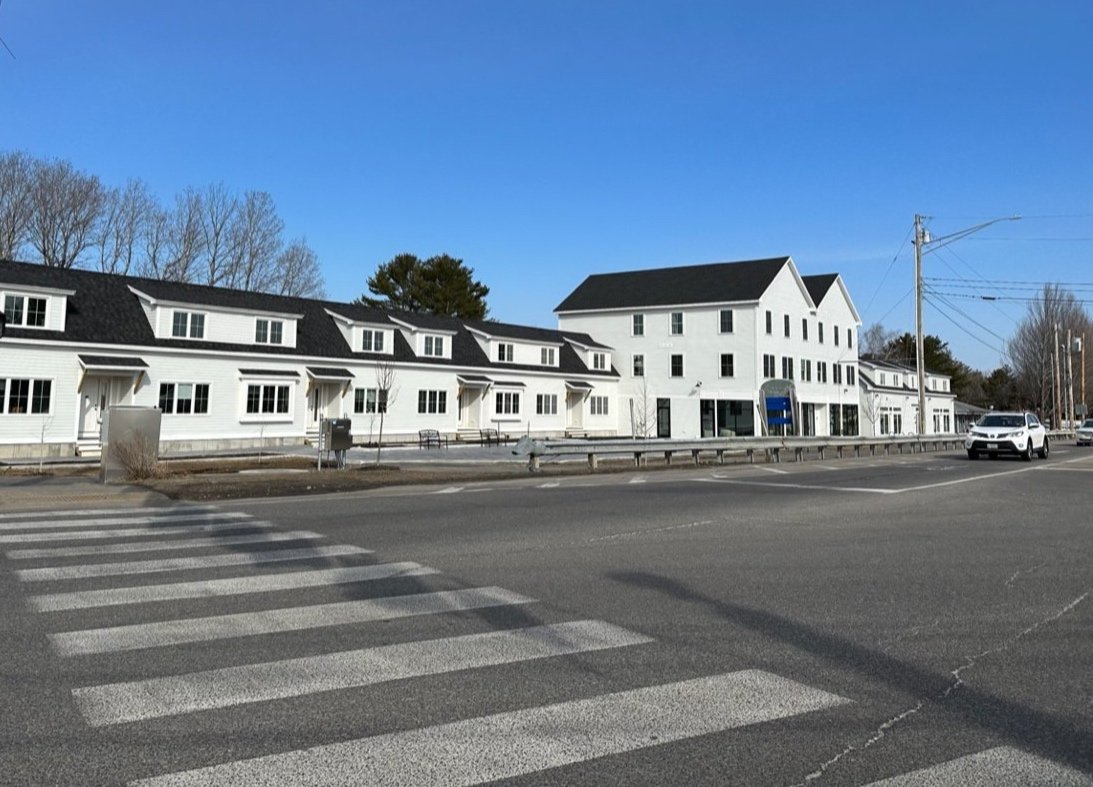
Action Alert: Support Thriving Corridors!

Action Alert: Support more housing in Maine along existing infrastructure!
A public hearing for LD 1673 is scheduled for Friday, May 12, 2023 at 9:00 am before the Legislature's Joint Select Committee on Housing.
LD 1673, An Act To Encourage Affordable Housing And Mixed-Use Development By Establishing A Thriving Corridors Program, establishes a program to assist municipalities in redeveloping high-impact corridors proximate to downtowns or village centers into mixed-use, mixed-income, walkable neighborhoods by enabling significant infill and redevelopment of underutilized land into housing and other uses.
The program will provide technical support and financial incentives to municipalities for:
Coordinating planning of the public street along with planning for the adjacent private land parcels.
Developing policies and tools that allow for increased development of affordable housing and other uses along the corridors.
Gaining public support for reconfiguration of the roadway to slow traffic, which may include the number of vehicle travel lanes and adding parking, protected bike lanes and/or sidewalks, to improve safety for all roadway users.
Establishing tax increment financing districts within high-impact corridors to finance public improvements without adversely affecting revenue sharing.
Benefits of the Bill:
This program focuses energy and resources on underutilized land that has already been impacted and has significant potential for infill and redevelopment. It directs development to places that tend to be located on water and sewer, where people are generally supportive of additional development.
Creates safer streets by replacing stop-and-go traffic that fluctuates between too fast and too slow with more consistent, slower flow movement that is safer for everyone and less frustrating for drivers.
Provides a strategy for aligning land use and transportation goals to more effectively meet both while creating an opportunity for towns to generate taxable value, without impacting their revenue sharing.
Questions related to this bill? Reach out to the Policy Action 2023 Complete Streets working group point person Zoe Miller at zoe@movingmaine.org.
The public hearing for LD 1752 is scheduled for Tuesday, May 9, 2023 at 1:00 pm before the Legislature's Joint Select Committee on Housing.
Begin your letter with:
Dear Senator Pierce, Representative Gere, and Members of the Joint Select Committee on Housing,
My name is [ ENTER NAME] and I live in [ ENTER TOWN].
Describe your reasons for supporting LD 1673.
The goal of Policy Action 2023 is to address barriers to and create incentives for equitable, sustainable growth and development that strengthens downtowns and villages of all sizes while pulling development pressure away from productive and open natural areas. We do so acknowledging that Maine has urban, rural, and suburban settings for which any solution may/not be a fit and a variety of people who deserve to be welcomed to their communities.
For information on all Policy Action 2023 bills, click HERE.
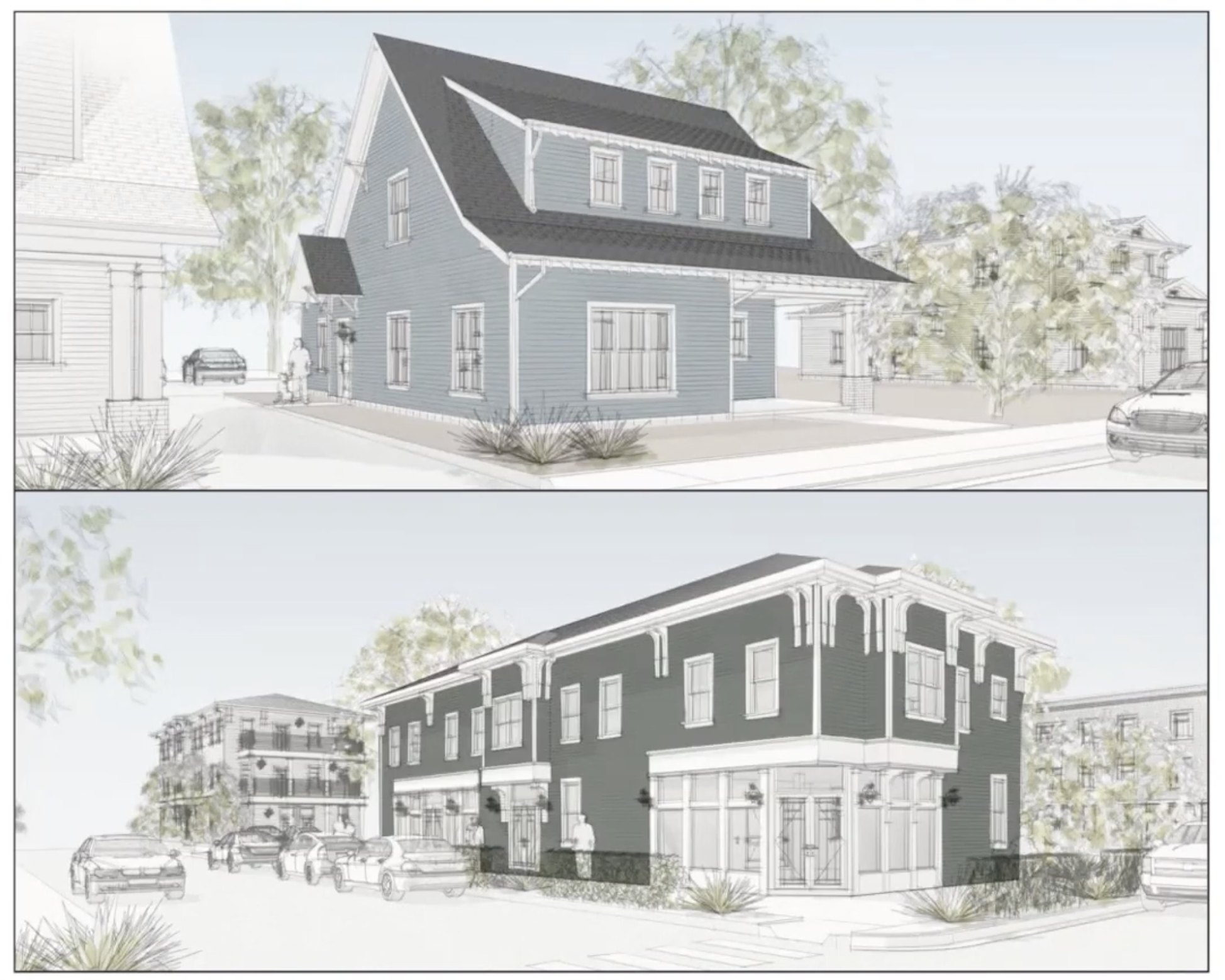
Action Alert: Support Pre-Approved Building Types

LD 1752 - Resolve to Prepare Pre-Approved Building Types
This resolve directs the state to develop a catalog of engineered-stamped building plans in compliance with the Maine Uniform Building and Energy Code. Municipalities may then choose to adopt any or all of the available pre-approved building plans within locally designated growth areas. Communities that opt into approving building types will offer an expedited review process for any proposed development that incorporates the pre-approved buildings.
Pre-approved buildings should be prepared so that the detail, design, and material specifications strike a balance between local architectural precedent and the cost of construction. Wherever possible, materials should be specified that are durable, repairable, and will be long-lasting in the local climate. Proposals which include plan sets incorporating best practices and contemporary standards for efficiency and resiliency will be given greater weight in selection criteria by the state.
This voluntary municipal process:
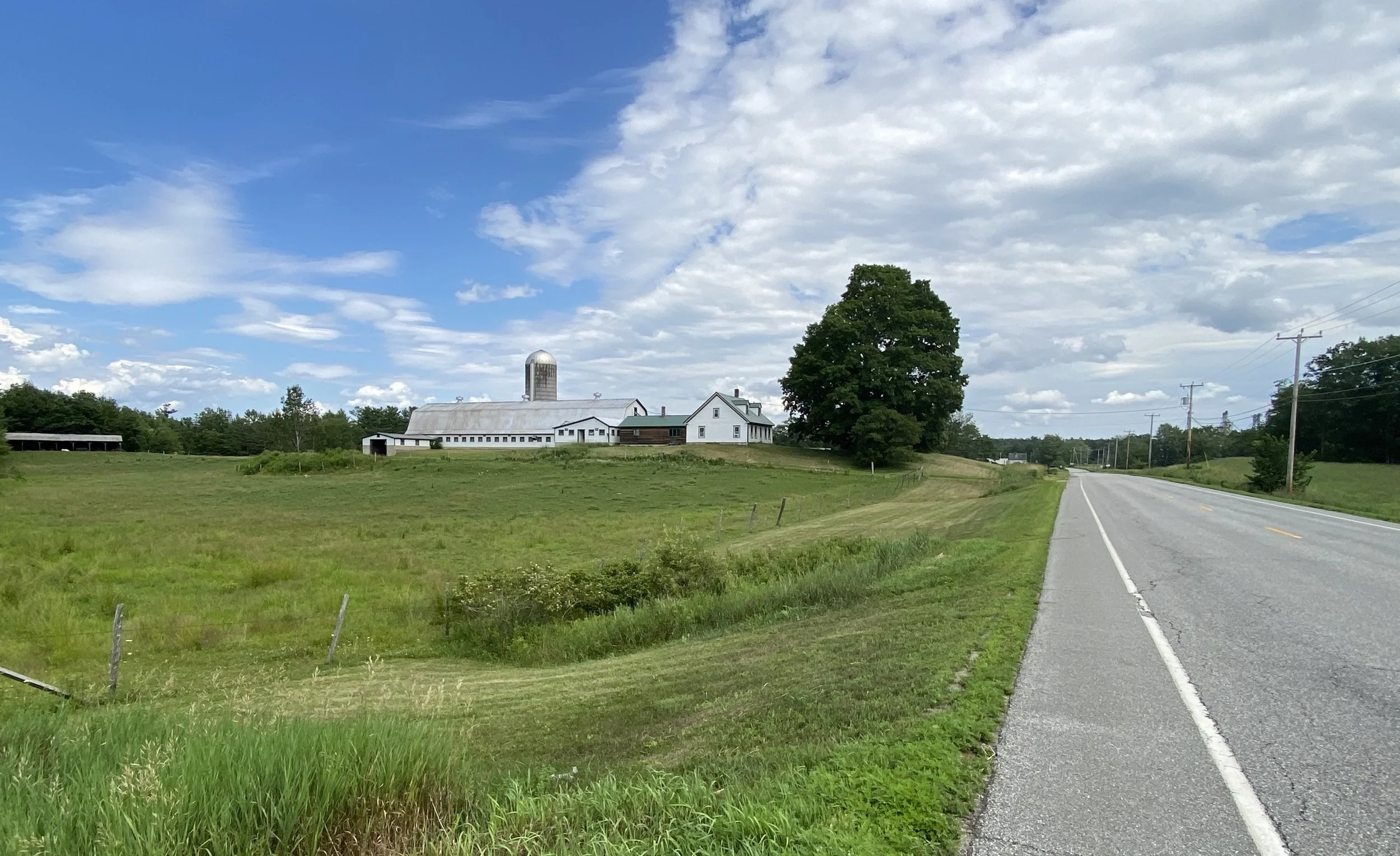
Is particularly well-suited to rural municipalities which may not have the staff or high-capital developers willing to invest.
Provides a toolkit for municipalities to help incentivize development that is supported by the community.
Lowers the cost of housing by reducing the time associated with securing project approvals.
Encourages residents to engage in local decision-making before a specific development proposal is being considered.
Removes systemic barriers to small developers who may not have the resources for design services knowledge of municipal approval processes.
Informational presentations on the concept can be found at the links below:
https://www.youtube.com/watch?v=cg4SZjRnaX8
https://youtu.be/BygzsJ58ytI
The goal of Policy Action 2023 is to address barriers to and create incentives for equitable, sustainable growth and development that strengthens downtowns and villages of all sizes while pulling development pressure away from productive and open natural areas. We do so acknowledging that Maine has urban, rural, and suburban settings for which any solution may/not be a fit and a variety of people who deserve to be welcomed to their communities.
Questions related to this bill? Reach out to the working group point person Galen Weibley at gweibley@presqueisleme.us.
The public hearing for LD 1752 is scheduled for Tuesday, May 9, 2023 at 1:00 pm before the Legislature's Joint Select Committee on Housing.
Begin your letter with:
Dear Senator Pierce, Representative Gere, and Members of the Joint Select Committee on Housing,
My name is [ ENTER NAME] and I live in [ ENTER TOWN].
Describe your reasons for supporting LD 1752.

Action Alert: Support Making Needed Updates to the Subdivision Statute
Help advance a resolve to update subdivision law to better direct development.

LD 1787 - Resolve Directing the Department of Agriculture, Conservation and Forestry to convene a stakeholder group tasked with a Comprehensive overhaul and modernization of the State Subdivision Statutes
This bill will charge the Department of Agriculture, Conservation and Forestry, in coordination with the Department of Environmental Protection, to convene a stakeholder group to review the subdivision laws in the Maine Revised Statutes, Title 12, chapter 206-A and Title 38, chapter 3, subchapter 1, article 6. The stakeholder group will work to:
Recommend a comprehensive overhaul and modernization of the subdivision laws that promotes development in growth areas.
Reduces development pressure in rural areas; protects public health, safety and welfare.
Advances state goals to produce affordable housing; and streamlines the development review process.
The public hearing for LD 1787 is scheduled for Tuesday, May 9, 2023 at 1:00 pm before the Legislature's Joint Select Committee on Housing.
The goal of Policy Action 2023 is to address barriers to and create incentives for equitable, sustainable growth and development that strengthens downtowns and villages of all sizes while pulling development pressure away from productive and open natural areas. We do so acknowledging that Maine has urban, rural, and suburban settings for which any solution may/not be a fit and a variety of people who deserve to be welcomed to their communities.
Questions related to this bill? Reach out to the Policy Action 2023 Subdivision working group point person Kara Wilbur at karawilbur@gmail.com.
Take Action
The public hearing for LD 1787 is scheduled for Tuesday, May 9, 2023 at 1:00 pm before the Legislature's Joint Select Committee on Housing.
Begin your letter with:
Dear Senator Pierce, Representative Gere, and Members of the Joint Select Committee on Housing,
My name is [ ENTER NAME] and I live in [ ENTER TOWN].
Describe your reasons for supporting LD 1787.
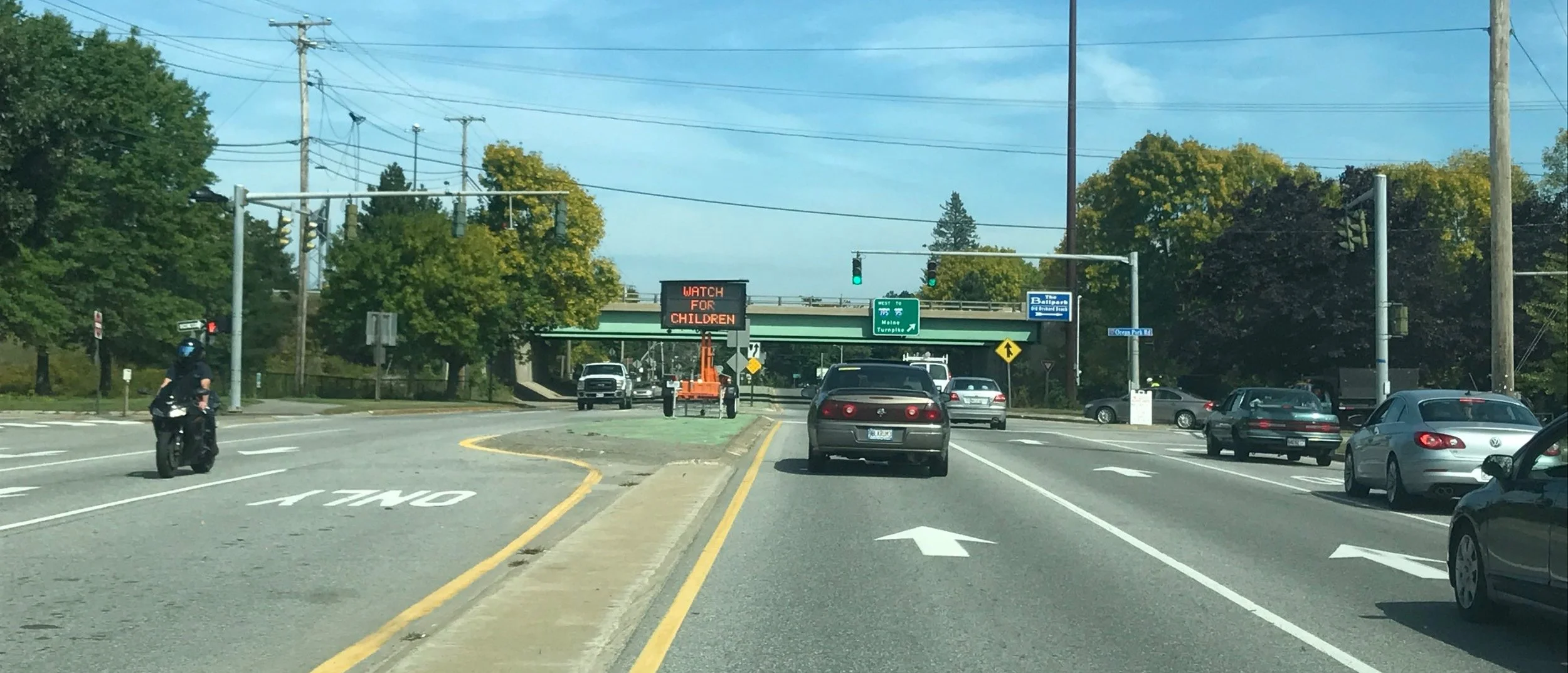
Action Alert: Support Safer Roadways Across Maine!

A public hearing for LD 1711 is scheduled for Tuesday, May 2, 2023 at 1:00 pm before the Legislature's Transportation Committee.
LD 1711, An Act to Provide for Safe Roadway Construction Design Criteria proposes to update MRSA §73, sub-§7 to establish safe roadway construction design criteria. The bill does the following:
Requires that safety metrics, crash data, and local economic significance based on a value per acre analysis are used by MaineDOT as factors to determine the classification of state roadways and funding and asset management priorities.
Establishes a MaineDOT review process for developing transportation construction project design controlling criteria that prioritize safety and requires MaineDOT to develop certain rules to administer the criteria based on standards developed by certain governmental agencies and professional transportation organizations.
Requires MaineDOT to develop rules pertaining to certain pedestrian facilities and bicycle facilities to provide transparent standards and ensure that a set of minimum standards for safety are met.
Benefits of the Bill:
Establishes an equitable transportation priority system to aid in the department's transportation capital improvement program by incorporating key safety, crash, and economic metrics. This will result in a program that is geographically balanced and addresses rural and urban transportation needs equally.
Establishes pedestrian and bicycle design criteria based on best practices to improve comfort and safety outcomes.
Provides more transparent design standards.
Establishes a diverse design review committee incorporating experts in urban design, planning, economic development, and bicycle and pedestrian safety to ensure a holistic design approach that takes into account all the complex factors that impact streets.
Questions related to this bill? Reach out to the Policy Action 2023 Complete Streets working group point person Matthew Pelletier at matthewpelletier44@gmail.com.
A public hearing for LD 1711 is scheduled for Tuesday, May 2, 2023 at 1:00 pm before the Legislature's Transportation Committee.
Begin your letter with:
Dear Senator Chipman, Representative Williams, and Honorable Members of the Joint Standing Committee on Transportation,
My name is [ ENTER NAME] and I live in [ ENTER TOWN].
Describe your reasons for supporting LD 1711.
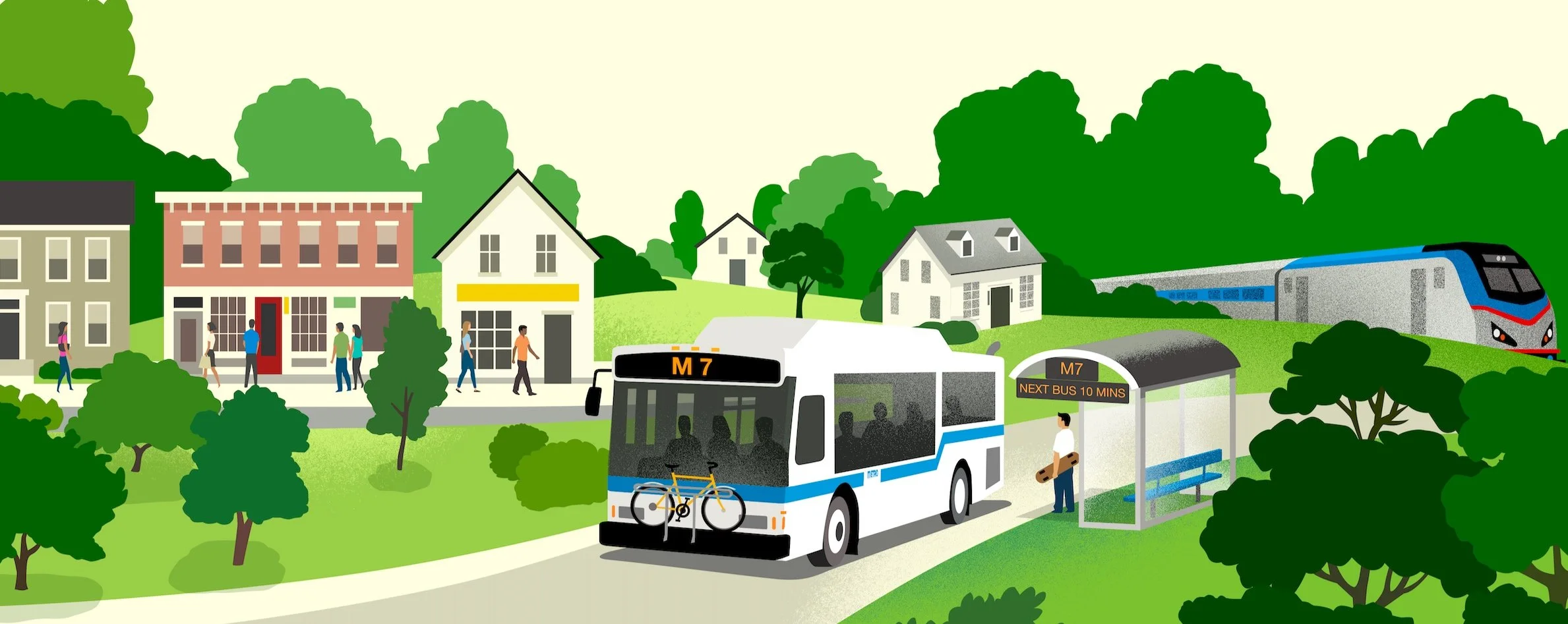
Action Alert: Support reinvigorating and investing in Maine’s public transit system!

PACTS Destination 2040
LD 1559, An Act to Advance the State's Public Transit Systems by Reinvigorating the Public Transit Advisory Council and Increasing Funding, will improve and strengthen the role of the state in order to support local transit operators, employers, commuters, and our climate goals. There are numerous measures, which include the following:
The bill strengthens the Public Transit Advisory Council (PTAC). The PTAC is a statewide group intended to assess current level of service and recommend improvements. This bill expands the role of the PTAC, while also diversifying its representation by adding members in labor, immigrant communities, and youth climate activism. It also calls for an additional transit operator. Additionally, the bill expands the role of the PTAC to develop a statewide plan, addressing how to achieve the standards of adequate access; develops a statewide mobility management program, improving coordination of the transit systems for mobility needs; and calls for submission of a report to MeDOT for anticipated statewide transit funding.
The bill provides a one time appropriation of $25M. This investment will supplement the operating and capital needs for transit operators within the current transit plan, create a mobility management program, and expand transit planning assistance for rural communities.
The bill provides a one time appropriation of $13.6M. As federal operating subsidies for transit expire this year, this appropriation will make sure that transit operates at its current level of service.
The bill amends the Sensible Transportation Policy Act. This act guides MeDOT decision-making on transportation planning, capital investment and project decisions. The act is amended to include commitments to expanded public transit, as well as Maine’s climate goals. A full set of talking points can be found HERE.
Questions related to this bill? Reach out to the Policy Action 2023 Complete Streets working group point person Cole Cochrane at colelondon295@gmail.com.
A public hearing for LD 1559 is scheduled for Tuesday, April 25, 2023 at 1:00 pm before the Legislature's Transportation Committee.
Begin your letter with:
Dear Senator Chipman, Representative Williams, and Honorable Members of the Joint Standing Committee on Transportation,
My name is [ ENTER NAME] and I live in [ ENTER TOWN].
Describe your reasons for supporting the legislation.
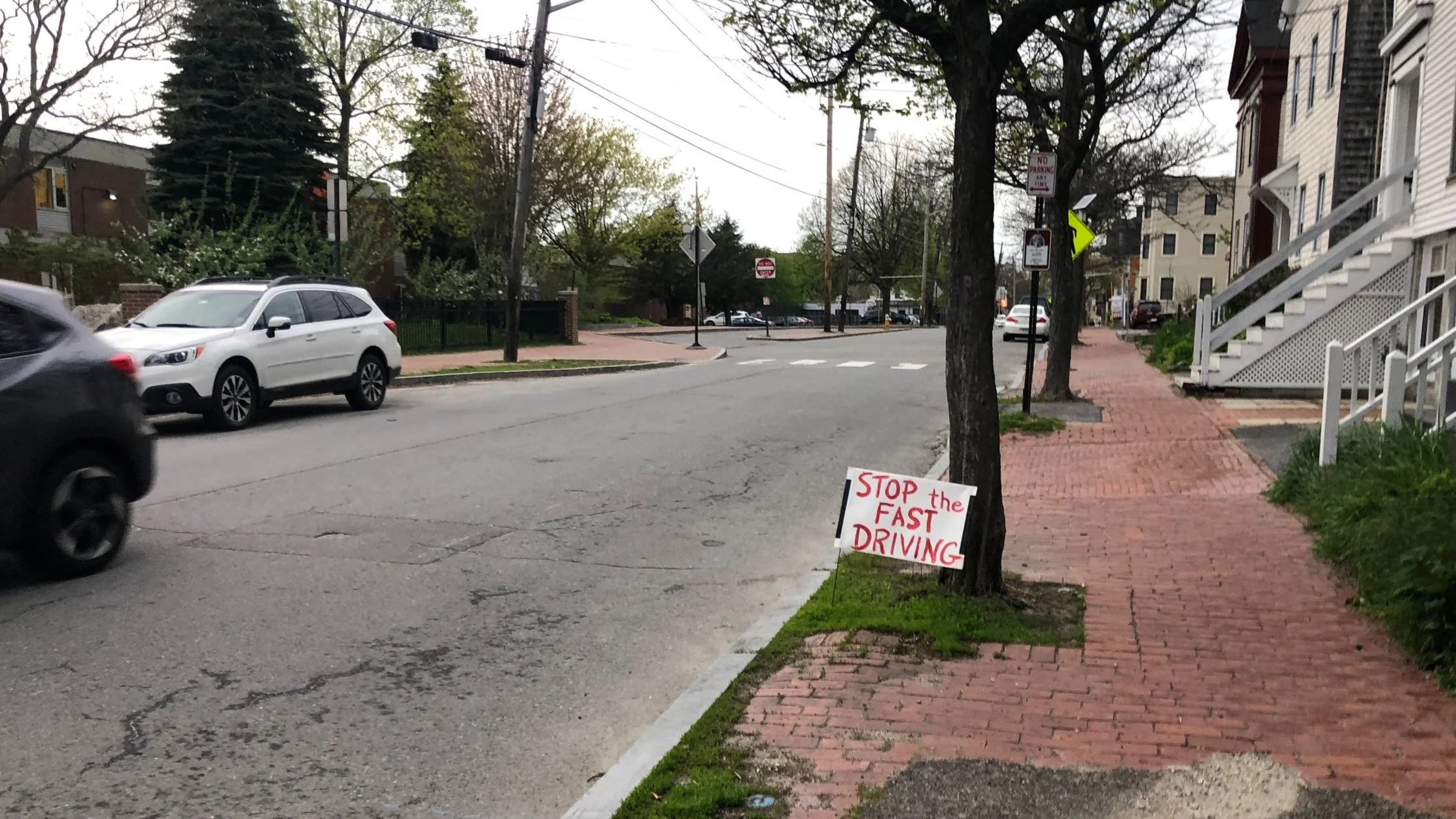
Action Alert: Support making roadway safety the first priority in Maine!

LD 1566 is a resolve to establish a state-level task force to lead Maine in building a strong, actionable foundation for safe mobility. The task force will convene a public process guided by Vision Zero – which acknowledges that even one death on our transportation system is unacceptable. Vision Zero focuses on safe mobility for all road users, through policies and system design rather than individual behavior. The approach is being successfully used in hundreds of states and municipalities.
The task force will identify the most effective actions to eliminate traffic deaths and serious injuries through:
Developing a comprehensive and coordinated action plan for Maine including short-term and long-term strategies with measurable goals and target dates.
Promoting effective and transparent collection and dissemination of traffic safety data.
Providing recommendations for changes to state, county, and municipal street design standards, state laws and municipal ordinances.
The task force will be composed of 22 members, including legislators, representatives from state agencies, professionals from the private sector, and members of the public sector with direct experience in traffic safety-related incidents. The Task Force is intended to have an ongoing role as an advisory body to MaineDOT and municipalities. A full set of talking points can be found HERE.
LD 1566 - A Resolve to Establish a Vision Zero Task Force to Recommend Strategies to Achieve the Goal of Eliminating Traffic Fatalities and Serious Injuries is scheduled for public hearing on Tuesday, April 25, 2023 at 1:00 pm and would advance key recommendations of Policy Action 2023, a state-wide public crowdsourcing effort convened by GrowSmart Maine and Build Maine that began in spring 2022.
The goal of Policy Action 2023 is to address barriers to and create incentives for equitable, sustainable growth and development that strengthens downtowns and villages of all sizes while pulling development pressure away from productive and open natural areas. We do so acknowledging that Maine has urban, rural, and suburban settings for which any solution may/not be a fit and a variety of people who deserve to be welcomed to their communities.
Questions related to this bill? Reach out to the Policy Action 2023 Complete Streets working group point person Zoe Miller at zoe@movingmaine.org.
A public hearing for LD 1566 is scheduled for Tuesday, April 25, 2023 at 1:00 pm before the Legislature's Transportation Committee.
Begin your letter with:
Dear Senator Chipman, Representative Williams, and Honorable Members of the Joint Standing Committee on Transportation,
My name is [ ENTER NAME] and I live in [ ENTER TOWN].
Describe your reasons for supporting the legislation.
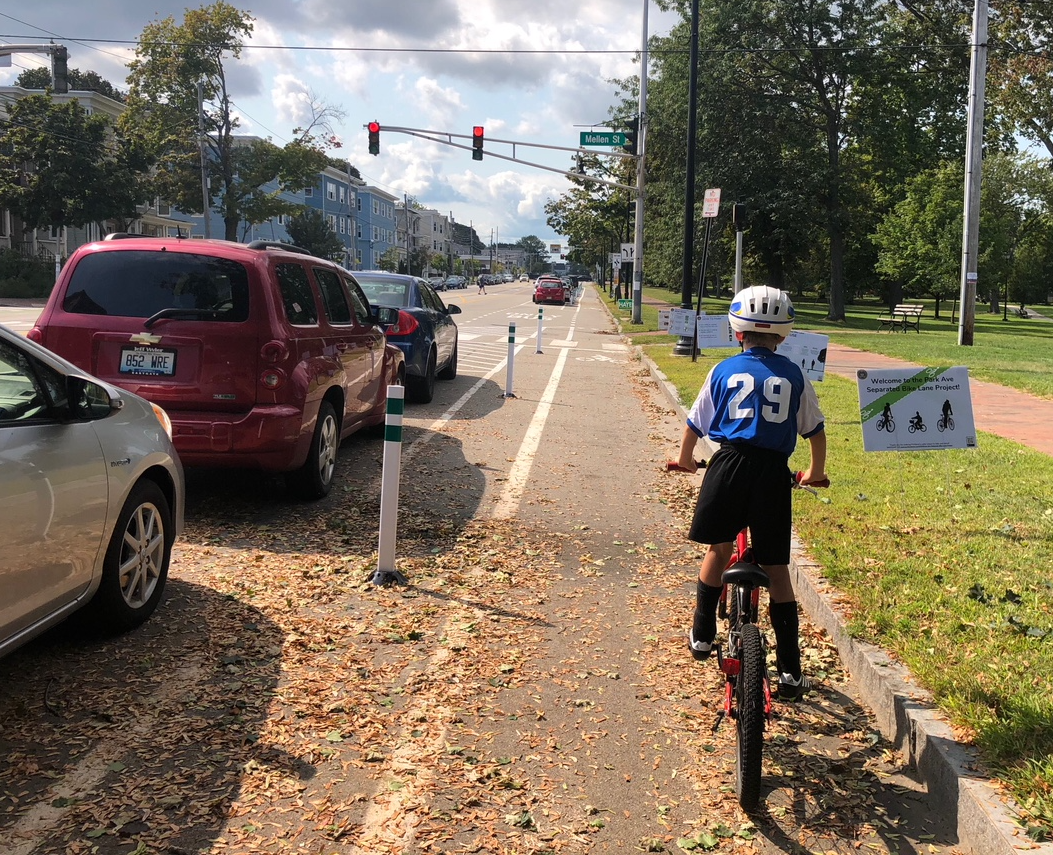
Action Alert: Support Making Needed Updates to the Subdivision Statute.

Communities across Maine want lower speeds but currently must wait for permission from the Maine Department of Transportation. LD 1634 empowers municipalities to set slower speeds without a speed study conducted by the MaineDOT and without assuming responsibility for setting or managing the speed limits on all roads.
Speed limits may be lowered by up to 10 miles per hour to no lower than a speed limit of 20 miles per hour and to make physical changes to a road in those areas to promote better compliance with posted speed limits. The bill also requires a municipality that has changed a speed limit to review any safety deficiencies, seek public input and report to the Legislature for a period of 5 years data on before and after motor vehicle speeds, pedestrian counts and bicycle counts. A full set of talking points can be found HERE.
LD 1634 - An Act to Grant Municipalities the Authority to Set Certain Lower Motor Vehicle Speed Limits Without a Department of Transportation Speed Study is scheduled for public hearing on Tuesday, April 25, 2023 and would advance key recommendations of Policy Action 2023, a state-wide public crowdsourcing effort convened by GrowSmart Maine and Build Maine that began in spring 2022.
The goal of Policy Action 2023 is to address barriers to and create incentives for equitable, sustainable growth and development that strengthens downtowns and villages of all sizes while pulling development pressure away from productive and open natural areas. We do so acknowledging that Maine has urban, rural, and suburban settings for which any solution may/not be a fit and a variety of people who deserve to be welcomed to their communities.
Questions related to this bill? Reach out to the Policy Action 2023 Complete Streets working group point person Zoe Miller at zoe@movingmaine.org.
A public hearing for LD 1634 is scheduled for Tuesday, April 25, 2023 at 1:00 pm before the Legislature's Transportation Committee.
Begin your letter with:
Dear Senator Chipman, Representative Williams, and Honorable Members of the Joint Standing Committee on Transportation,
My name is [ ENTER NAME] and I live in [ ENTER TOWN].
Describe your reasons for supporting the legislation.

Support state policies to help direct development!
Support legislation advanced through Policy Action 2023 and statewide work to help make our communities stronger!
Policy Action 2023 is in full swing, with 15 bills to help make our communities stronger. Please take a look at the full slate of proposals here, and fact sheets for active bills here. If you have feedback, concerns, questions, or would like more information on how to support any of these bills, please contact Build Maine or GrowSmart Maine.
The goal of Policy Action 2023 is to address barriers to and create incentives for equitable, sustainable growth and development that strengthens downtowns and villages of all sizes while pulling development pressure away from productive and open natural areas. We do so acknowledging that Maine has urban, rural, and suburban settings for which any solution may/not be a fit and a variety of people who deserve to be welcomed to their communities.
Help Shape State Policy and Join a Working Group!
Since the spring, GrowSmart Maine and Build Maine have been convening statewide partners to discuss and develop forward-thinking legislative proposals. The current effort builds on work that has been ongoing since 2019, involving hundreds of people across the state. We want to share the current slate of legislation and most importantly, we want your feedback to strengthen each proposal in time for the 2023 legislative session.
In spring 2022, we hosted three virtual brainstorming sessions to prioritize policy actions for the 2023 legslative session. The results of this effort can be found at our interactive Miro board, where participants posted ideas, and helped to sort and prioritize policy actions. https://miro.com/app/board/uXjVOGiZJvQ=/?share_link_id=289269622616
From that work, we arrived at 8 key policy actions. Those were presented at the Build Maine conference in Skowhegan in June 2022, where we gathered additional feedback and direction. Since that time, 8 working groups have been meeting to advance the proposals. The results of this incredible collective work was presented at the GrowSmart Maine Summit in October 2022. Work continues to shape these proposals into legislation in time for the upcoming session. The 8 Policy Actions that we are moving forward can be found here:
The working groups are open to anyone interested in helping do the work and advance the legislation. Please sign up to join a working group by clicking the button below. It makes sense for you to join a working group if you are passionate about the topic and can make time to engage in the work, if you can help write technical policy language, help with logistics or promotion, or can bring other energy to the work. Time commitments will likely be weekly or bi-weekly zoom calls with your working group, with potential for production time in between meetings, depending on your role.
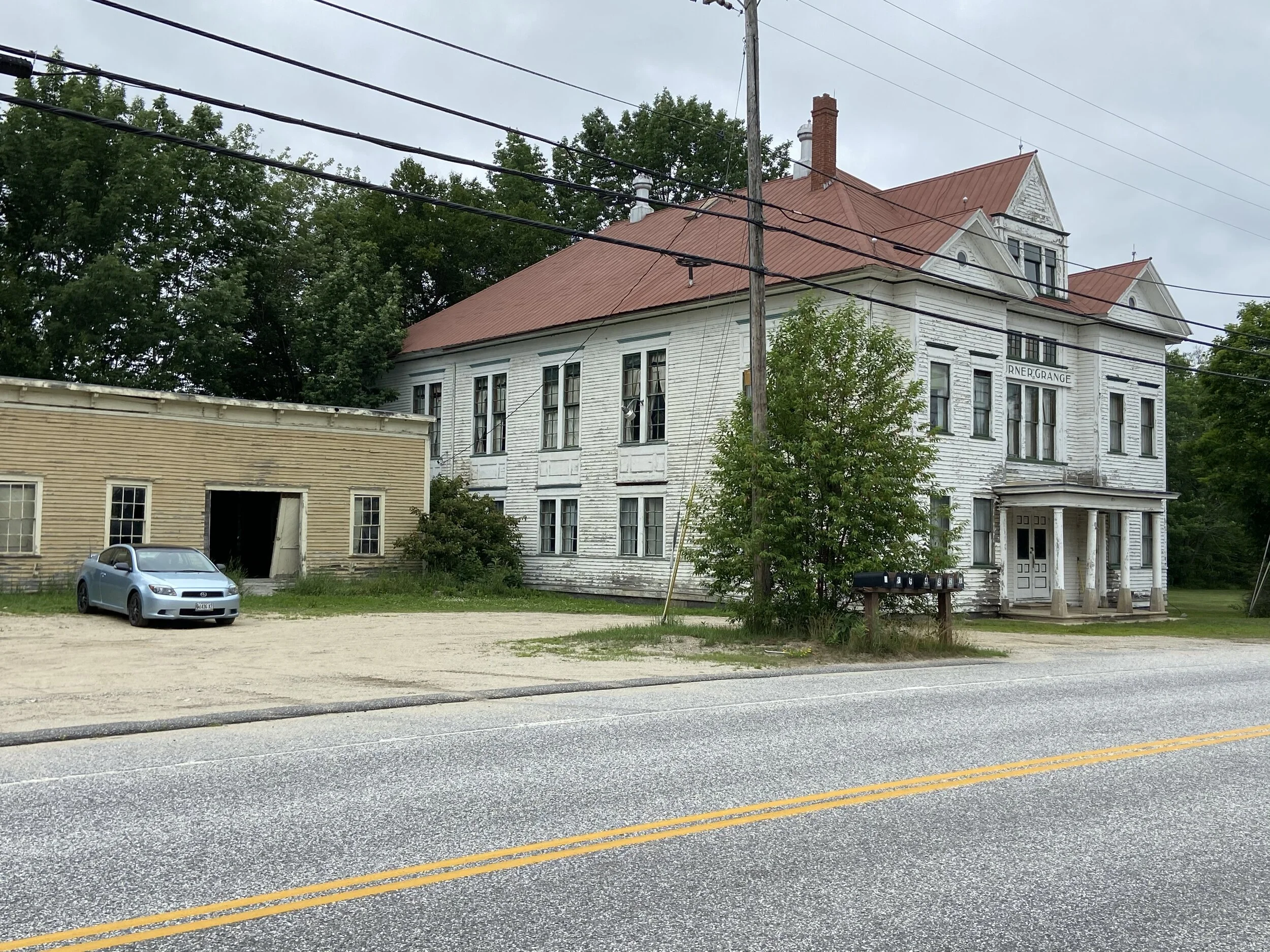
Support LD 1694: the Maine Redevelopment Land Bank Authority! Hearing Thursday, May 13, 9:30 am
Please consider actively support LD 1694, an Act to Create the Maine Redevelopment Land Bank Authority, bringing Federal and State dollars into the hearts of our communities.
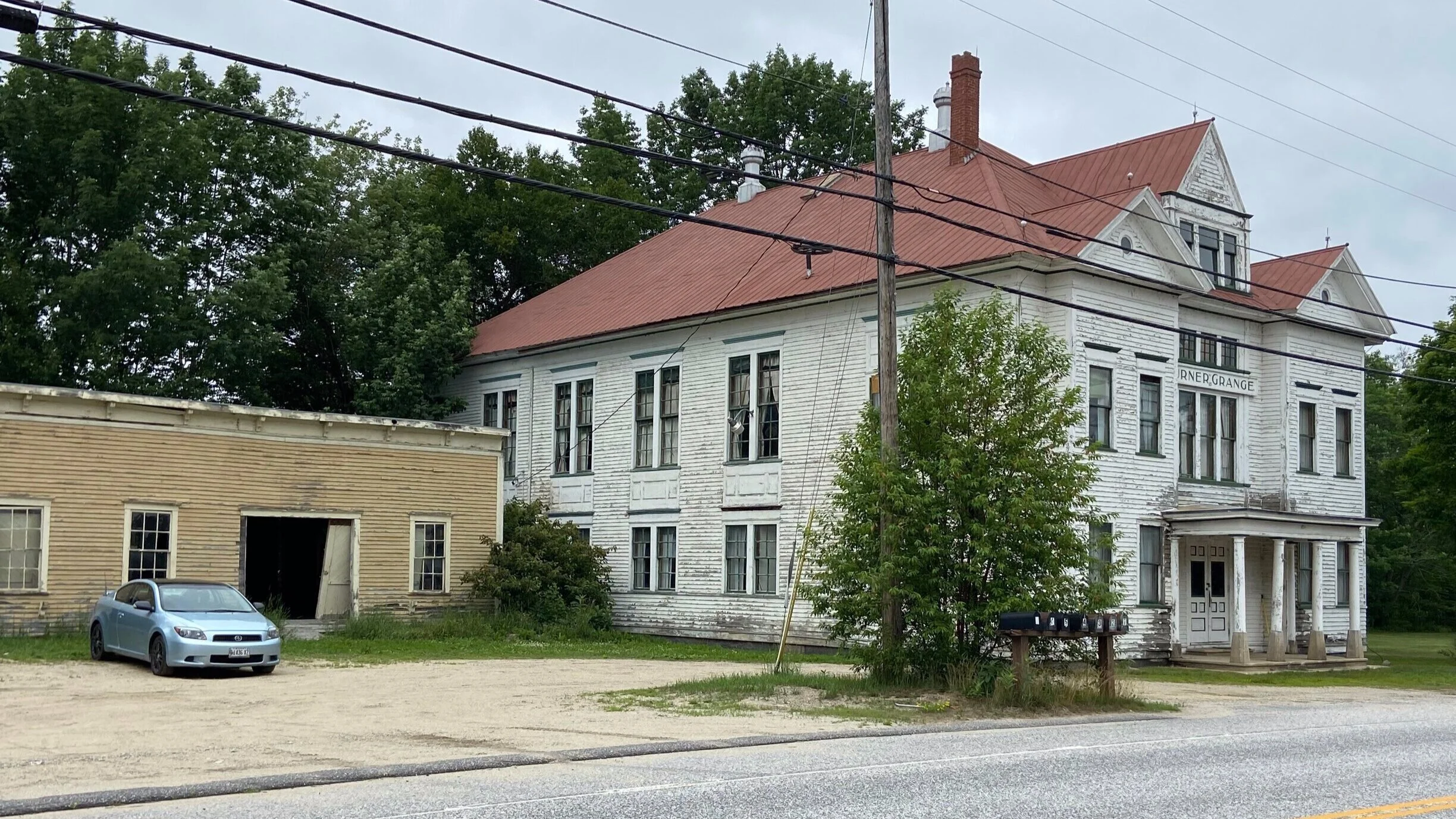
Are there buildings in your community that are in a state of decline? Is new development happening at the edges of your town on land that was once working farms or forests? Do you have challenging properties that have environmental contamination?
Build Maine and partners from across the State have been working for the eighteen months to find solutions to these pressing community problems. Please help us support of LD 1694, “An Act to Create the Maine Redevelopment Land Bank Authority” by learning about the legislation and testifying in support on Thursday, May 13, at 9:30 am (details on how to testify below).
The redevelopment land bank working group includes municipal officials from Sanford, Rumford, and Caribou, along with regional planning organizations from the Androscoggin, Kennebec Valley, and Greater Portland, the Northern Maine Development Commission, as well as the Department of Environmental Protection. We came together to find a solution to a statewide problem: how to help communities deal with compromised or blighted properties and make it easier to redevelop in our village, town, and city centers.
LD 1694 seeks to establish the Maine Redevelopment Authority. It has two very distinct functions:
It authorizes the establishment of municipal, regional, and state Land Banks, which are focused on the conversion of vacant, abandoned, and tax delinquent properties into productive use. It will:
Provide a catalyst for new development and critical housing that the private market can’t support.
Focus resources on blighted, abandoned, and environmentally hazardous properties and buildings.
Provide support for neighborhoods in need of revitalization and redevelopment.
Address financial liabilities impacting the State and municipalities and increase long-term tax revenues.
Provide maximum flexibility for municipalities - they can establish their own land bank, join a regional organization, or enter an intergovernmental agreements with the state Redevelopment Authority.
Allow Maine's state government to rehabilitate state-owned properties more cost-efficiently; Michigan found that they were selling distressed state properties at a reduced rate, but then developers were turning back to the state for incentives. By utilizing a pro-active approach with their Land Bank, they were able to see a better return on their property investment.
It establishes the Development Ready Communities Program. This is a separate program that prioritizes funding for local projects with a strong financial return and that meet shared state and local economic, housing, environmental, transportation, and quality of life goals.
The program will align and coordinate state agency funding, policies, and procedures around locally identified projects and provide a path for municipalities and unorganized territories to prioritize investments and for the State to direct funding and resources into the hands of communities.
All municipalities and territories are eligible to become development ready communities and the program will be accessible to communities of all sizes and levels of capacity.
LD 1694 also Leverages Federal Resources:
Eighteen states currently have Land bank structures, and Maine is leaving significant federal funding in the table as a result. There are currently two pieces of federal legislation – one for $5 billion, and one that can access up to $60 million, that include funds for both the establishment and operational support for Land Banks.
LD 1694 also Meets our Economic Development and Climate Change Goals:
This legislation is not for a someday solution. It establishes tools to help our local communities solve the problems of identifying redevelopment goals now, and actively helps them plan for and redevelop those properties. It is an issue that is faced by the smallest towns and our most urban centers. Benefits of this legislation include supporting local quality of life, resiliency (both financially & environmentally), and utilizing existing infrastructure.
In many cases it can alleviate the need for new construction, thereby preventing new greenhouse gas emissions while maintaining existing carbon storage in the property.
If we are really going to tackle climate change and use our resources wisely, we need to focus housing in places where we have existing infrastructure - whether that’s our small crossroads, village centers, or bigger downtowns. The Maine Redevelopment Land Bank Authority is one of the few tools proposed this session which can actively create the 20,000 affordable housing units needed to meet the demand here in Maine. Land banks work effectively with housing authorities, local land trusts and entities such as Habitat for Humanity to transfer these properties that have been rehabilitated to then become affordable housing. They also work, for example, with environmental groups if the municipality has a need for green spaces, especially in its urban centers.
You may also find examples in your own community where this bill is needed. For example, the town of St. Francis in Aroostook County has a population of approximately 445 residents, and a total one and a half municipal positions.The town had a developer interested in redeveloping an empty local school building into an assisted living facility. The clean-up costs were prohibitive, and the town was unsuccessful getting USDA, brownfields, and CDBG funding to assist. Land Banks are often utilized for exactly these kind of projects, as they have the staffing, access to federal resources, and knowledge that can leveraged by even our smallest communities, to bring projects such as desperately needed senior housing to Aroostook County.
On March 17th at 9:00am, we gave an overview of proposed legislation that will create a Maine Redevelopment Land Bank Authority, bringing Federal and State dollars into the hearts of our communities through the creation of a Land Bank and Development Ready Community Program. This generational legislation will address the systematic disinvestment that plagues many of our communities and will incentivize development in the places that meet shared municipal and state goals to maximize investment.
If you have more questions, comments, or would like to testify on behalf of the Maine Redevelopment Land Bank Authority legislation, please contact connect@build-maine.com.
LD 1694 is sponsored by:
Lead Rep. Melanie Sachs of Freeport, D
Lead Co-sponsor in Senate: Senate President Troy Jackson, D
Senator Eloise Vitelli, Majority Leader, D
Sen. Matt Pouliot, Asst. Majority Leader, R
Rep. Rachel Talbot Ross, Asst. Majority Leader, D
Rep. Kristen Cloutier, Lewiston, D
Rep. Sue Bernard, Caribou, R
Rep. Anne Matlack, D
Rep. Kyle Bailey, D
———————
HOW TO TESTIFY IN SUPPORT OF LD 1694
If you’d like to support this bill, there are three options for providing testimony. Speaking live via zoom will be most effective and is the only way for the committee to know in advance how many people support this bill:
If you would like to testify live, which is the most effective, please register as soon as possible at the link below and indicate your support. Once you sign up, you will receive a confirmation email with a zoom link to the hearing. We recommend you sign up at the link below as soon as possible. If you want to also upload your written remarks, you can do that at any time before or shortly after the hearing by going back to the same link below. At the hearing, you will be given 3 minutes to speak, after which the committee members may ask you questions. It is ok to read your written remarks or prepare remarks that are different from your written testimony. You cannot share screens or show documents.
If you aren’t able to testify live but you are able to provide written remarks on letterhead, please go to the link below and follow instructions for uploading a PDF file. Written testimony should include the opening salutation below and may contain visuals or links.
If you are unable to testify live or submit thorough remarks on letterhead, please register at the link below, follow the instructions, and enter a few sentences in the written testimony field. Include the opening salutation (see below) and that you support the bill.
You will have to go to this link: https://www.mainelegislature.org/testimony/
You will click on Public Hearing.
You will then choose a committee: - Select one - Innovation, Development, Economic Advancement.
Then choose a date - Select one - May 13 2021 9:30AM.
Then choose the bill - LD 1694 - An Act To Create the Maine Redevelopment Land Bank Authority.
Then check the box to - I would like to present my testimony live.
Select - I am for the proposed legislation. **You only have the option of showing you support the bill when you click the box to provide live testimony.
Upload written testimony or type your brief remarks directly into the field.
———————
The way to begin testimony for this Committee is:
Good morning Senator Curry, Representative Roberts, and esteemed members of the Joint Standing Committee on Innovation, Development, Economic Advancement, and Business:
My name is _________ and I am here in full support of LD 1694, An Act to Create the Maine Redevelopment Land Bank Authority.