
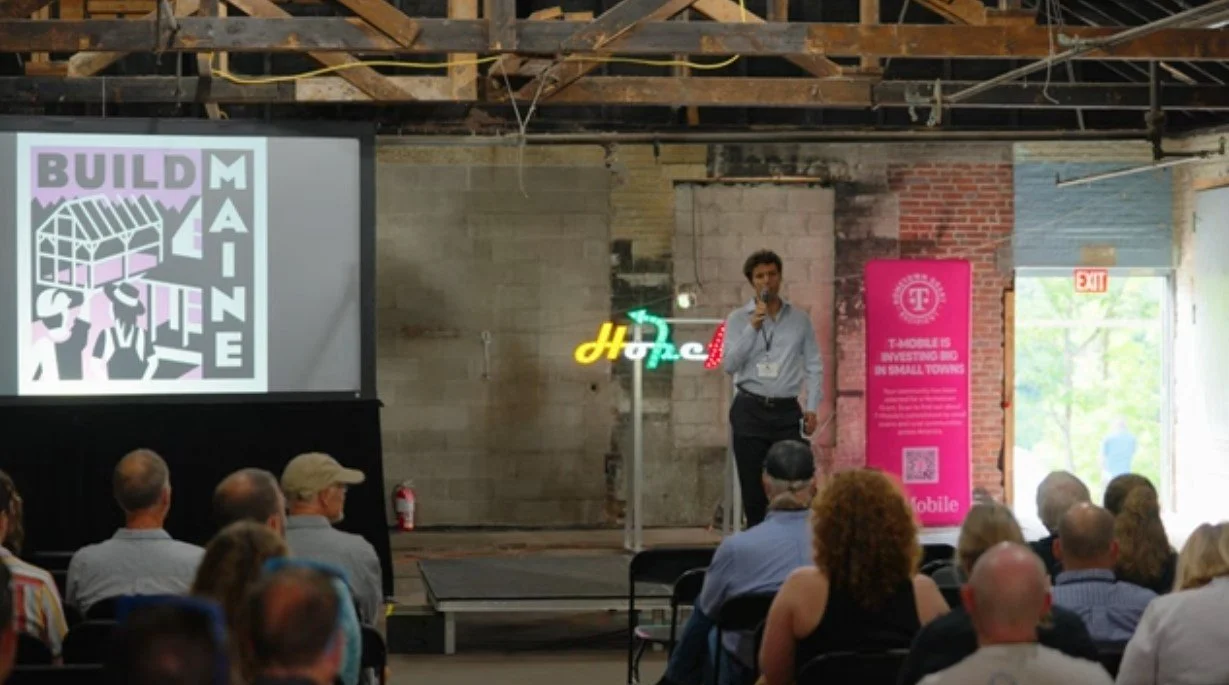
Jake Bittle
Over the next fifty years, millions of Americans will be caught up in this churn of displacement, forced inland and northward in what will be the largest migration in our country’s history. In other words, they’ll be coming to Maine. Jake Bittle is a staff writer at Grist, where he covers climate change. His work has been published in The New York Times, The Guardian, Harper’s New York Magazine, The New Republic, and numerous other publications. He is the author of The Great Displacement: Climate Change and the Next American Migration. Join us to learn more about the extent to which climate migration will impact Maine, and why planning will become an increasingly necessary activity to protect what we love most about our state.
Staff Writer | Grist | Brooklyn, New York
Over the next fifty years, millions of Americans will be caught up in this churn of displacement, forced inland and northward in what will be the largest migration in our country’s history. In other words, they’ll be coming to Maine. Jake Bittle is a staff writer at Grist, where he covers climate change. His work has been published in The New York Times, The Guardian, Harper’s New York Magazine, The New Republic, and numerous other publications. He is the author of The Great Displacement: Climate Change and the Next American Migration. Join us to learn more about the extent to which climate migration will impact Maine, and why planning will become an increasingly necessary activity to protect what we love most about our state.
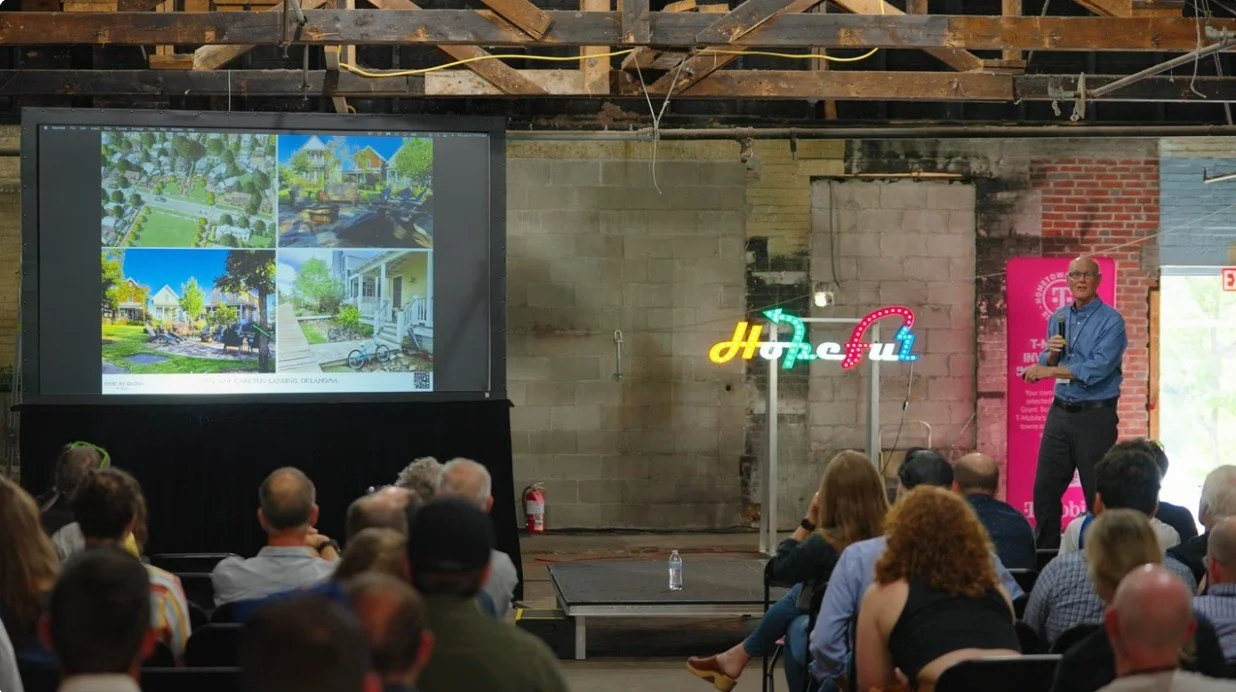
Tom Low
Maine has a finite amount of time to determine whether we will learn from America’s costly suburban mistakes, or continue to erode our treasured way of life. The choice between farms vs. highways, vast uninterrupted timber forests vs. low density residential sprawl, NIMBYism in our downtowns vs. embracing development where we need it most, open roads vs. traffic choked arterials - these are all choices we will make, either through apathy and non-action or through intentional work to change our land use development system. Tom will share inspiration and the steps we must take to develop in a way that Mainers will in fact love.
Director | Civic by Design | Charlotte, North Carolina
Maine has a finite amount of time to determine whether we will learn from America’s costly suburban mistakes, or continue to erode our treasured way of life. The choice between farms vs. highways, vast uninterrupted timber forests vs. low density residential sprawl, NIMBYism in our downtowns vs. embracing development where we need it most, open roads vs. traffic choked arterials - these are all choices we will make, either through apathy and non-action or through intentional work to change our land use development system. Tom will share inspiration and the steps we must take to develop in a way that Mainers will in fact love.
Highlights From Policy Action 2023
Build Maine and GrowSmart Maine innovated a new process for engaging a broad statewide conversation, best described as public policy crowdsourcing. Learn about work that started in 2019, involving hundreds of people across the state, and the big policy moves from the 2023 session to improve built outcomes while reducing demand for development on rural lands.
Nancy Smith, GrowSmart Maine; Zoe Miller, Moving Maine Network; Josh Caldwell, Natural Resources Council of Maine, Tara Kelly, Maine Preservation; Representative Melanie Sachs; Representative Traci Gere
Build Maine and GrowSmart Maine innovated a new process for engaging a broad statewide conversation, best described as public policy crowdsourcing. Learn about work that started in 2019, involving hundreds of people across the state, and the big policy moves from the 2023 session to improve built outcomes while reducing demand for development on rural lands.
State Policy + Funding Updates
Hear the latest state policy and funding updates from the MaineDOT, GOPIF, DECD, and Maine Housing.
Steve Landry | MaineDOT
Learn about the process for quickly and inexpensively improving street safety through a new DOT process centered around quick build projects. Also hear updates to the speed setting policy to help reduce dangerous vehicle speeds on local roads.
Sarah Curran | Deputy Director, Climate Planning and Community Partnerships, with the Governor’s Office of Policy Innovation and the Future
For the past 3 years, the Governor’s Office of Policy, Innovation, and the Future has been providing Community Resilience Partnership grants for local, municipal-led projects that help advance climate-friendly policies. Hear highlights from this work and ongoing opportunities for project funding.
Benjamin Averill | Housing Opportunity Program Coordinator, DECD
Learn about funding available to service providers and municipalities to assist with ordinance development and public engagement to increase housing opportunities in Maine communities.
Mark Wiesendanger | MaineHousing
Visit the MaineHousing exhibit booth to hear more about housing programs and the state-wide effort to close the gap on the 84,000 new homes required to meet current and future demand.
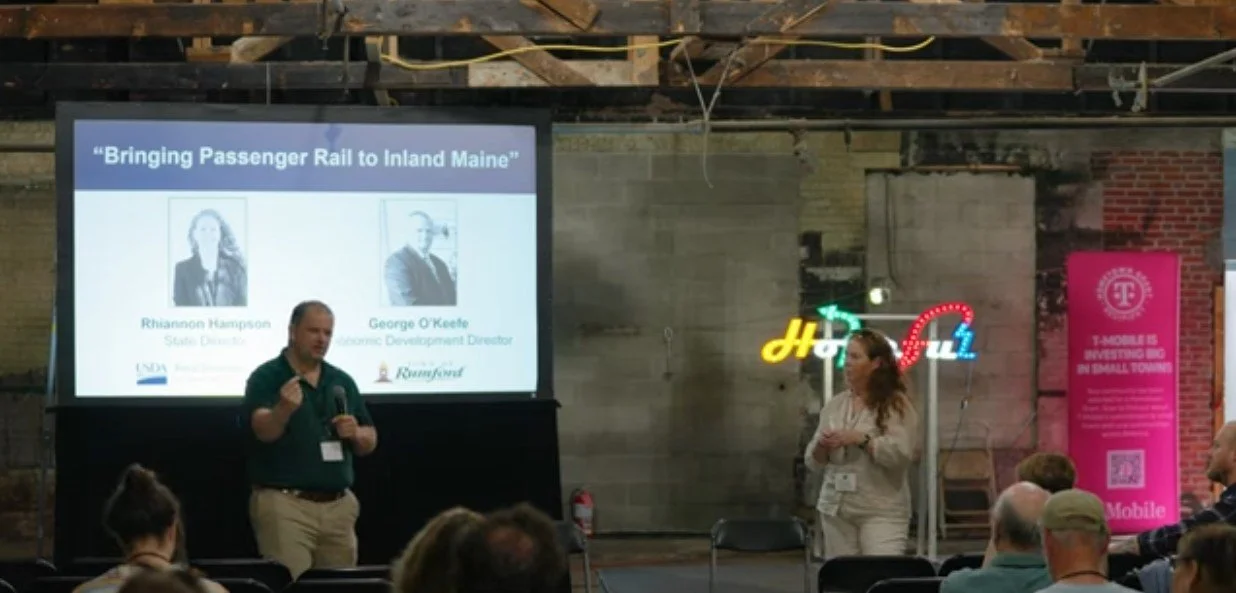
Addressing Traffic Congestion with Passenger Rail to Inland Maine
Efforts to expand passenger rail to Lewiston, Waterville, Augusta, Bangor, and other inland communities have faced resistance, pointing to Maine’s small population as the reason. As more people move to Maine to escape climate issues in other states, suburban development and related traffic impacts continue to erode our regional road system. Maine has an opportunity to think bigger about the future of transit, recognizing the greater return on investment associated with transit-oriented investment in existing community centers, the benefits of locating housing near jobs, and the potential for inter-city rail to support regional and local micro-mobility. Join a conversation with voices from rural Maine to explore how strategic investment in rail can fuel our communities.
George O’Keefe | Town of Rumford
Rhiannon Hampson | Maine State Director, USDA Rural Development
Efforts to expand passenger rail to Lewiston, Waterville, Augusta, Bangor, and other inland communities have faced resistance, pointing to Maine’s small population as the reason. As more people move to Maine to escape climate issues in other states, suburban development and related traffic impacts continue to erode our regional road system. Maine has an opportunity to think bigger about the future of transit, recognizing the greater return on investment associated with transit-oriented investment in existing community centers, the benefits of locating housing near jobs, and the potential for inter-city rail to support regional and local micro-mobility. Join a conversation with voices from rural Maine to explore how strategic investment in rail can fuel our communities.
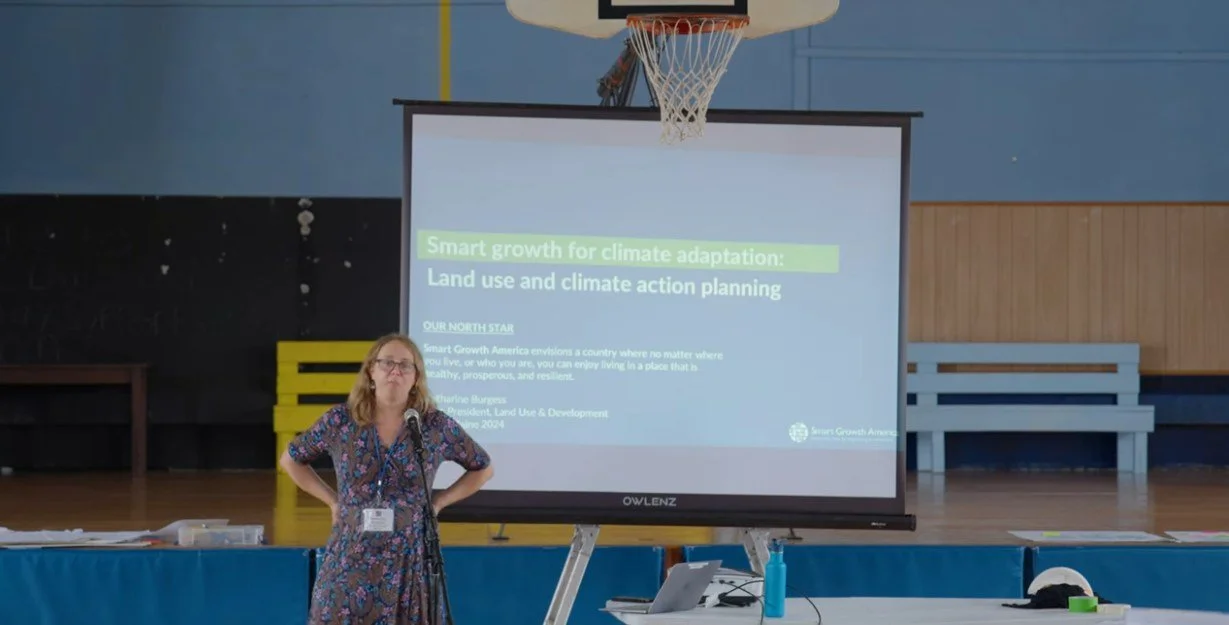
Katharine Burgess
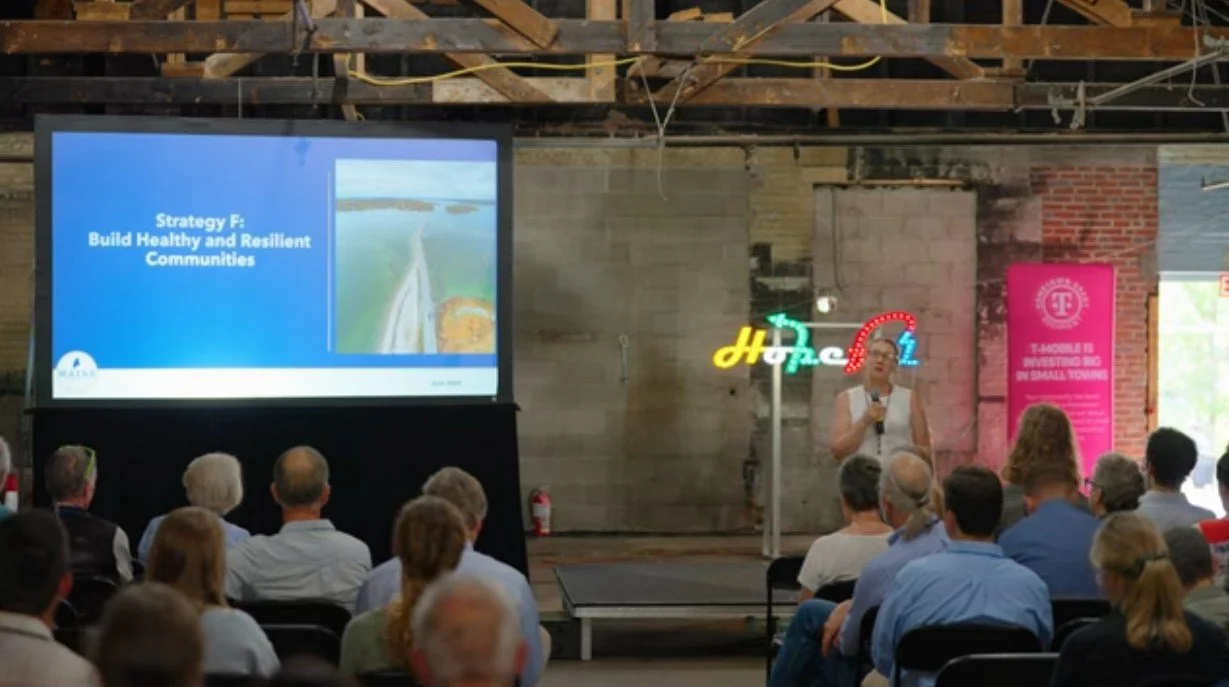
Communities in Maine and across the U.S. are facing both a housing access crisis and a climate crisis. New housing cannot be built quickly enough, and existing supply is under threat from more frequent and intense climate events. How can Maine communities prioritize building in locations less susceptible to harm and how can historic communities, many of which are based around charming but vulnerable settings such as waterfronts, realistically adapt? Hear from Katharine on strategies to integrate resilience and pro-housing approaches, as well as SmartGrowth America’s efforts to break down silos between climate and housing policy at the Federal level.
Vice President, Land Use & Development | SmartGrowth America | Washington DC
Communities in Maine and across the U.S. are facing both a housing access crisis and a climate crisis. New housing cannot be built quickly enough, and existing supply is under threat from more frequent and intense climate events. How can Maine communities prioritize building in locations less susceptible to harm and how can historic communities, many of which are based around charming but vulnerable settings such as waterfronts, realistically adapt? Hear from Katharine on strategies to integrate resilience and pro-housing approaches, as well as SmartGrowth America’s efforts to break down silos between climate and housing policy at the Federal level.
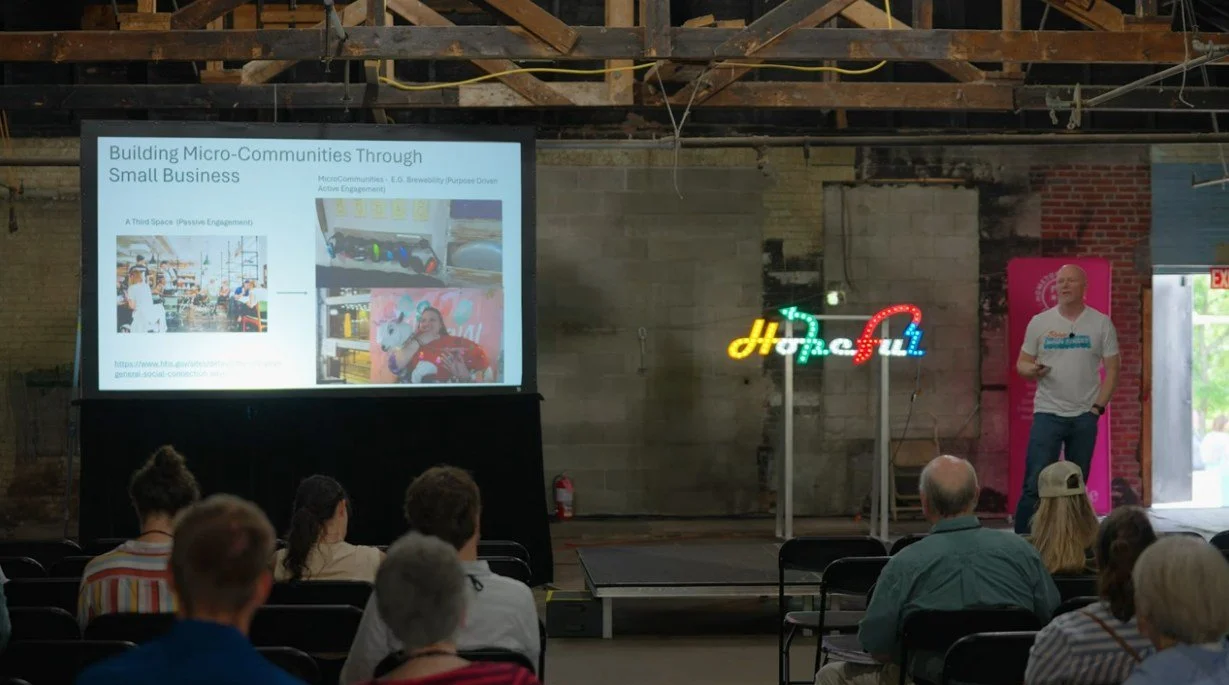
Matt Wagner
Local businesses are the heart and soul of Main Street, serving as hubs for social connection and economic growth. Learn about the innovative ways that Main Street businesses can overcome the adversity of the on-line economy, whether it’s starting a new enterprise or keeping a multi-generation business alive. This session will also explore how high growth businesses and changemakers can be empowered to start businesses, creating wealth for their families and improving outcomes for their communities. This session will highlight work being done in communities across the U.S. to refocus on quality of place and break down barriers to entrepreneurial opportunity in communities that have been left behind by the global economy.
Chief Program Officer | Main Street America | Washington DC
Local businesses are the heart and soul of Main Street, serving as hubs for social connection and economic growth. Learn about the innovative ways that Main Street businesses can overcome the adversity of the on-line economy, whether it’s starting a new enterprise or keeping a multi-generation business alive. This session will also explore how high growth businesses and changemakers can be empowered to start businesses, creating wealth for their families and improving outcomes for their communities. This session will highlight work being done in communities across the U.S. to refocus on quality of place and break down barriers to entrepreneurial opportunity in communities that have been left behind by the global economy.
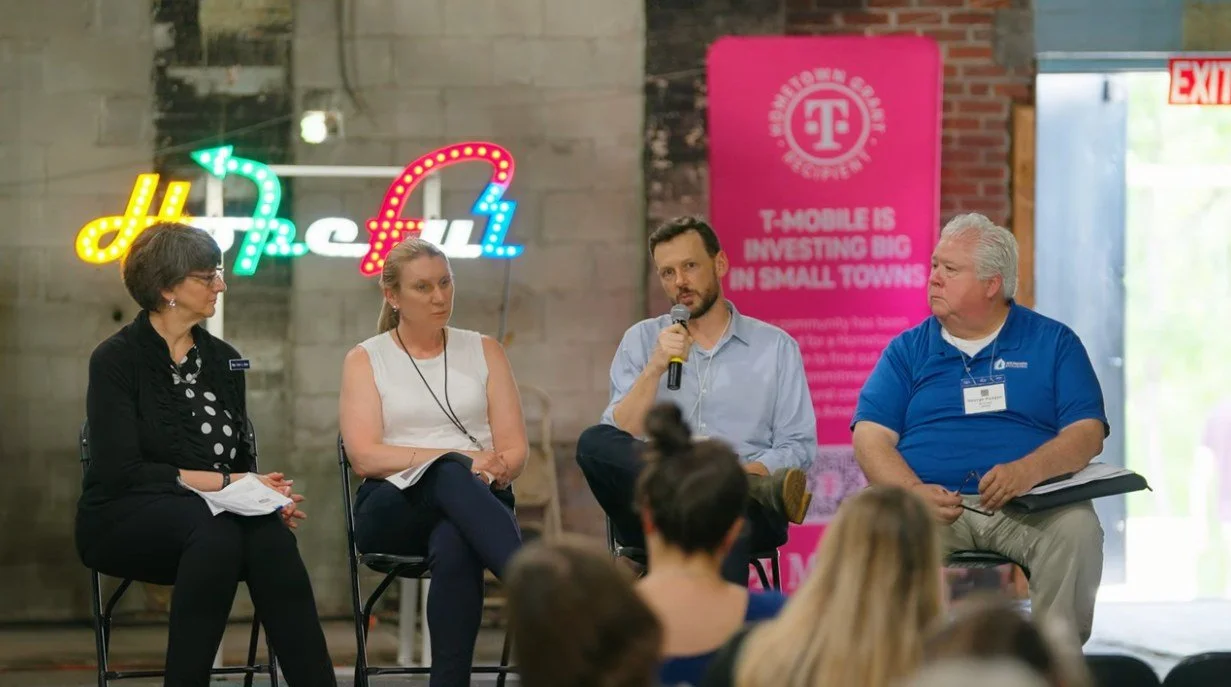
Breaking From the Suburban Era to Unlock Housing: Strategies From Maine, New Hampshire + Vermont
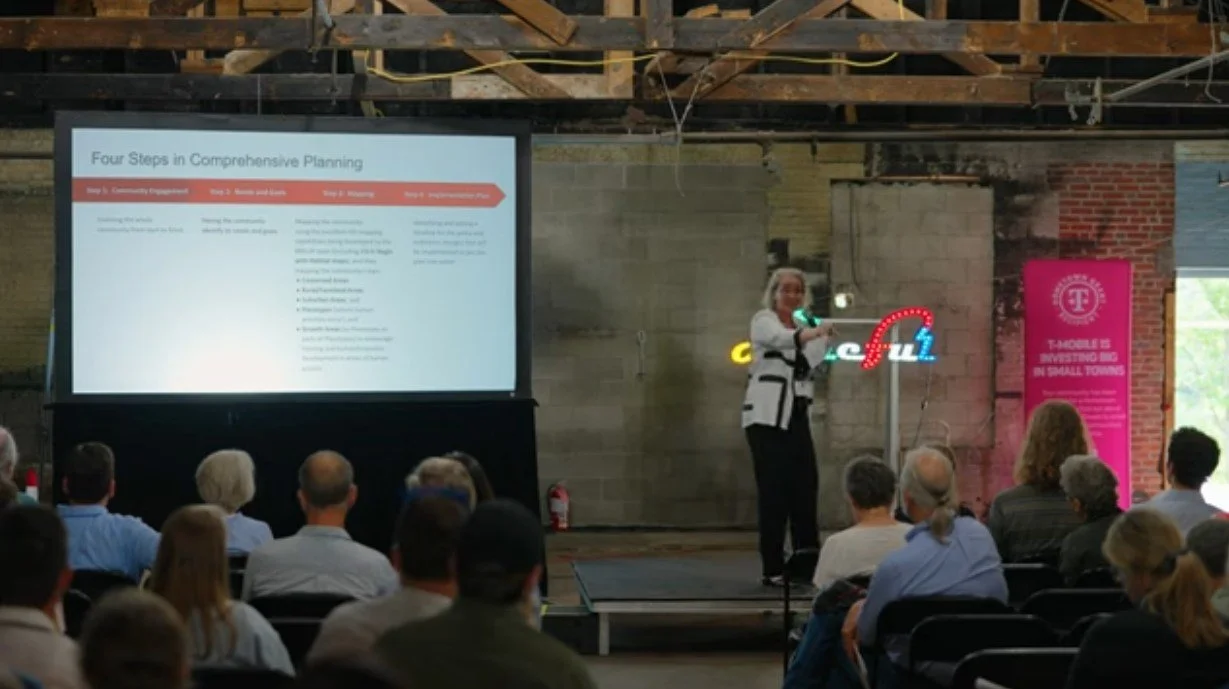
Northern New England states are making big moves to shift to a place-based approach to investment by strengthening state and regional support for local planning and coordinating state funding in service of local housing and development projects. Learn about new programs to provide a state-level path to project approvals in New Hampshire, tools to help enable small-scale building types in Vermont, realignment of programs to support planning by Maine communities, and more.Building Small presents an insightful view at what is possible along with the tools needed to make it happen.
Moderator: Representative Traci Gere; Sarah Curran | Deputy Director, Climate Planning and Community Partnerships, Governor’s Office of Policy Innovation and the Future; Jacob Hemmerick | Vermont Department of Housing & Community Development; George Reagan | Director, Community Engagement, New Hampshire Housing
Northern New England states are making big moves to shift to a place-based approach to investment by strengthening state and regional support for local planning and coordinating state funding in service of local housing and development projects. Learn about new programs to provide a state-level path to project approvals in New Hampshire, tools to help enable small-scale building types in Vermont, realignment of programs to support planning by Maine communities, and more.Building Small presents an insightful view at what is possible along with the tools needed to make it happen.